GR Yaris GR Corolla engine

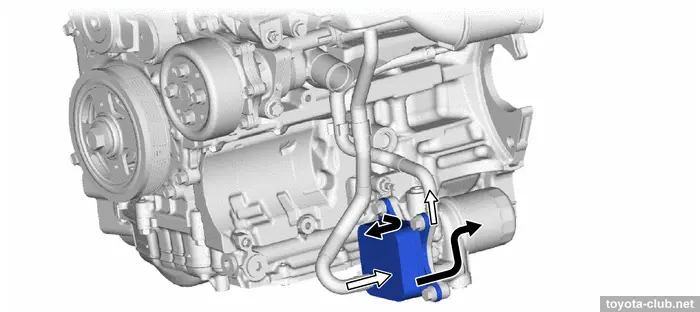
I mean this is the oil cooler... and doesn't it use the engine coolant? What actual effect would you get from increasing it slightly?
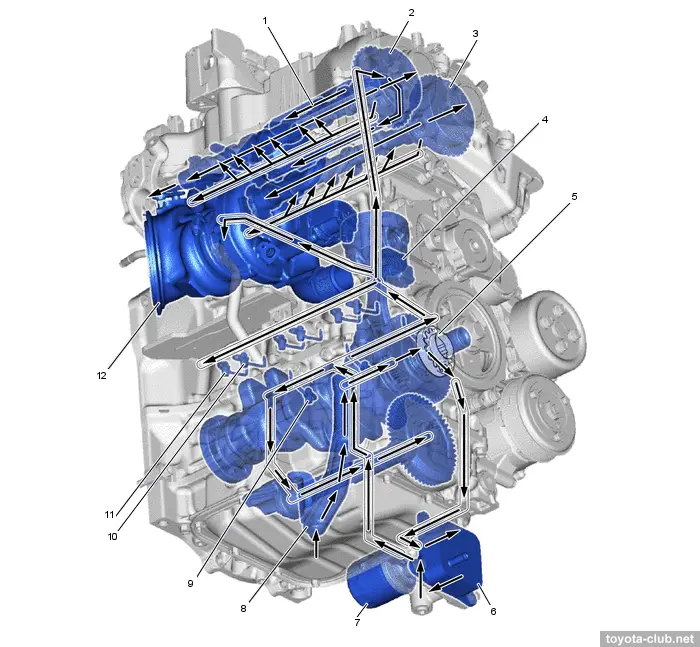
gts_lub_layout.webp


gts_lub_oil_cooler.webp


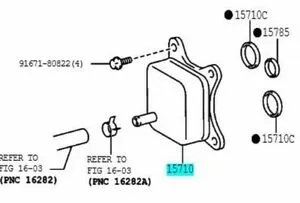
s-l300.webp
 
I mean this is the oil cooler... and doesn't it use the engine coolant? What actual effect would you get from increasing it slightly?
You can increase cooling capacity quite some up to the point the coolant itself gets too hot. So it's a balance. Maybe the coolant get some better cooling too, it's a bigger deeper nose after all...
 
Road and Track today have article about dealers being told not too many orders and 5k per year !!
 
Some more information:

" Increased boost pressure isn't the only source of the power increase, too. The central tailpipe on the GR Corolla helps reduce back pressure, further increasing horsepower."
Silly though that if you look some Group B rally cars and Huyndai Rally1 car it has single exist exhaust pushing close to 400hp, with Group B closer to 500hp. so not sure if three exhausts are REALLY needed, or if it is more of an Type-R - match thingy..

When I was a kid used to count number of exhaust pipes - back then it was not that common to have double exhausts. Coolest car was a modded Merc that had six(!) exhaust pipes.
 
Yeah, the whole exhaust tip size/number is just ego-stroking/market positioning for road cars. As you say, some extremely serious racing cars have little more than a single 60 or 70 mm exhaust
 
from what i was reading, it's not the number that matters but the way the exhaust gases travel. the two left and right pipes are going through restrictions and muffler. the central pipe is a pass through without these restrictions and opened up at high load, high rpm. so the car can be efficient and quiet to regulations but also free breathing when needed. am i wrong?
 
It is all about marketing.

Imagine they said "we gave the Corolla just a little more boost to compensate for the weight". How many Yaris owners would feel bad and wanted that too?

Instead it is the miraculous third exhaust pipe.
Spot on.

Pistons, what a joke. The valve stems might be thicker, and the pistons and valves made from stronger alloy. This is just to ensure durability at the slightly higher boost, which is all that’s required to increase power by less than 10% (GRY is running ~280 bhp standard without GPFs in Japan).

You could have 6 tailpipes coming out of the silencer (which is fed by a single exhaust pipe the entire length of the car from manifold to silencer), won’t affect back pressure one jot. It’s marketing led design. Stick an attachment on the end of your garden hose that splits the water into 3 hoses, measure the flow pressure with and without.

Then stick a turbine on the hose right near the tap, see what that does for back pressure. Silly.
 
hm. i can not agree. the GRY showed a more free breathing exhaust system reduces back pressure and enhanced power output by supporting more boost. The forged pistons of the GRC will do add to supporting more boost.

"The center one is for the high-power. Above a certain engine rpm, there is a valve. So they open that and it goes straight to the outside of the car, which reduces the backpressure and achieves the 300 horsepower." - Toyota Chief Engineer Naoyuki Sakamoto

what i do not understand, why not allway open it up? just to keep it quieter and so on? valve sounds kinda anti lag like.... :eek: do not know, just dreaming.

I think it's more about reducing the pipe dimensions with the valve in low rpm to achieve higher gas speeds and therefore better scavenging. At high rpm they can open up the valve to reduce back pressure because the gases already moove faster and so scavenging is good enough.

And don't want to be picky, but exhaust gases move in pulses down the system. Your water reference is therefore false by design, isn't it?
 
Last edited:
The backpressure of an exhaust is the sum of all parts and how they interact. Silencers are more complicated than a garden hose and even so, different nozzles or more of them definitely can drastically change the flow also on a hose so that point is also lost on me.

Yes you can just put a straight pipe on a car and it won't have much backpressure, but when actually silencing the exhaust, making it flow well without it costing a fortune or weighing a ton is actually a bit of an art, engineering art. Stock GRY exhaust is only 12kg and for being as quiet as it is, it is very free flowing.
Even so, sacrificing some silencing at high rpm (noise regs are often coupled to a certian rpm) and willing to add the cost, an in effect high rpm central dump pipe will reduce backpressure and help top end power (mid revs torque=power is unchanged) together with no GPF and some added boost (10% more boost adds about 5% more power if boost is around 1 bar at top end).
 
The point I failed to make is that the back pressure /flow rate of the exhaust system is much more greatly affected by obstructions to the flow such as GPFs, catalytic converters and silencers than how many tailpipes come out of the silencer.

But, I didn’t realise it was a bypass of the rear silencer, which would of course reduce back
pressure. That also might explain why they didn’t bring the car to Europe, as bypassing the silencer would make it difficult or impossible to pass the noise restrictions.
 
The number of pipes has something to do with male appendages!
 
Is anyone gonna import one of these from Japan? Wonder how much that would cost!
 
Back
Top
