Fine so long as you arent driving a rally stageSo what’s the consensus on rear camber bolts? Fine for fast road use on B roads or should we get the camber arms?
I’m assuming marking the bolts with a pen or marker would show up any movement just for peace of mind.
Navigation
Install the app
How to install the app on iOS
Follow along with the video below to see how to install our site as a web app on your home screen.
Note: This feature may not be available in some browsers.
More options
Style variation
You are using an out of date browser. It may not display this or other websites correctly.
You should upgrade or use an alternative browser.
You should upgrade or use an alternative browser.
GR Yaris How far have you gone with your chassis mods? How far would you like to go?
- Thread starter StringTheoryGarage
- Start date
doabackflip
Devoted member
Torsen diffs spin a wheel if it loses contact with the ground - this was happening to me on track, I think at the front. Changed ARB at both ends to try not to upset the balance, it stopped the wheel lifting. As you say, I wouldn’t use them if I could avoid it, as you are basically making your suspension less independent, and a stiffer bar reduces grip at that end of the car - so you might use them to change under/oversteer balance. In my case, they were cheaper than fitting a plated diff 
Generally people like them as the car corners flatter, so it feels faster - but mostly isn’t. One possible exception is stock lower control arms losing camber in bump, and stiffer bars reduce this. But better to use Wiborg/verkline arms instead I think.
I think I had the whiteline originally, which fouled the brake ducts i was using. I think I changed to hardrace at some point to be able to use the ducts again.
Generally people like them as the car corners flatter, so it feels faster - but mostly isn’t. One possible exception is stock lower control arms losing camber in bump, and stiffer bars reduce this. But better to use Wiborg/verkline arms instead I think.
I think I had the whiteline originally, which fouled the brake ducts i was using. I think I changed to hardrace at some point to be able to use the ducts again.

Anti-roll bars are my next quandary, seems like from reading around they don't really improve much on circuit pack cars. Only needed if you want adjustably between front and rear. Any dispute?
This is an interesting topic to me as well as I've spoken to a Workshop near the Nürburgring Nordschleife that has become quite specialised in GR Yarises and they very warmly recommended ARBs as a mod to me, even taking into consideration my described usage profile which is mostly Roadtrips on sometimes absolutely terrible (fantastic for our cars) tarmac in parts of France and Italy. I did specifically ask them if they don't think that it will oftentimes reduce grip due to less independently moving suspension but they were convinced that it would be an improvement in feel and grip 99% of the time. There does not reeeally seem to be a consensus on the Forums concerning ARBs either. Any experiences to share?Torsen diffs spin a wheel if it loses contact with the ground - this was happening to me on track, I think at the front. Changed ARB at both ends to try not to upset the balance, it stopped the wheel lifting. As you say, I wouldn’t use them if I could avoid it, as you are basically making your suspension less independent, and a stiffer bar reduces grip at that end of the car - so you might use them to change under/oversteer balance. In my case, they were cheaper than fitting a plated diff
Generally people like them as the car corners flatter, so it feels faster - but mostly isn’t. One possible exception is stock lower control arms losing camber in bump, and stiffer bars reduce this. But better to use Wiborg/verkline arms instead I think.
I think I had the whiteline originally, which fouled the brake ducts i was using. I think I changed to hardrace at some point to be able to use the ducts again.
Altocumulus
Dedicated member
- Jul 16, 2024
- 157
- 247
I think it depends on which other suspension components are modified. ARBs might compliment the standard suspension for reduced body roll on track. But if you have afterwork suspension with stiffer springs the body roll can be tuned out independently at each corner.This is an interesting topic to me as well as I've spoken to a Workshop near the Nürburgring Nordschleife that has become quite specialised in GR Yarises and they very warmly recommended ARBs as a mod to me, even taking into consideration my described usage profile which is mostly Roadtrips on sometimes absolutely terrible (fantastic for our cars) tarmac in parts of France and Italy. I did specifically ask them if they don't think that it will oftentimes reduce grip due to less independently moving suspension but they were convinced that it would be an improvement in feel and grip 99% of the time. There does not reeeally seem to be a consensus on the Forums concerning ARBs either. Any experiences to share?
I'm have a more educated position on this topic after further research. When running spring rates in the 40-50n/mm range there can be benefit with uprated roll bars if you have enough tyre grip to warrant it. You are aiming to balance compliance with cornering control in this situation. The more serious coilovers with 70-80n/mm springs really don't benefit at all.

LittleMav
Obsessed member
- Jul 22, 2023
- 282
- 477
Concerning ARB‘s: I have a Gen 1 Circuit Pack and ran the car 3 years with OEM-suspension (which I was very happy with) and adjustable H&R ARB‘s front & rear, in my setting 137%/105% stiffer front/rear than OEM. I really loved it. Last year I got a deal on a new Öhlins R&T with 80 Nm springs f/r I could not walk away from. I was then testing different ride-hights and settings for approx. 8 months. The car is now 19/11 mm lower f/r and the ARB‘s are in their softest setting 61%/53% stiffer than OEM. I run 9/11 Klicks open f/r and love the ride. It tops everything I had before. I don’t really track the car and use it as a daily, with a preference for Mountain-Passes and B-Roads.

Sekred
Totally Hooked
- Dec 18, 2021
- 471
- 603
Sorry, this is nonsense.
A waisted bolt, which adjustable camber bolts are an example of, will actually have better clamping reliability than a conventional bolt for a given torque as the bolt stretch will be greater due to the reduced cross section of the waisted part.
Torque is only a way of applying load to the bolt and needs to overcome the friction of the thread and seating face, and that's it. You apply the recommended torque regardless.
As both of these friction factors are the same in this application whether the bolt is conventional or waisted, the absolute load applied will be the same but the additional elastic stretch of the waisted bolt will mean that it is better able to withstand loss of tension due to vibration, heat cycling etc.
The difference on such a short bolt under low load will be marginal, but it is undeniable.
Source: Worked in industrial bolting for many years
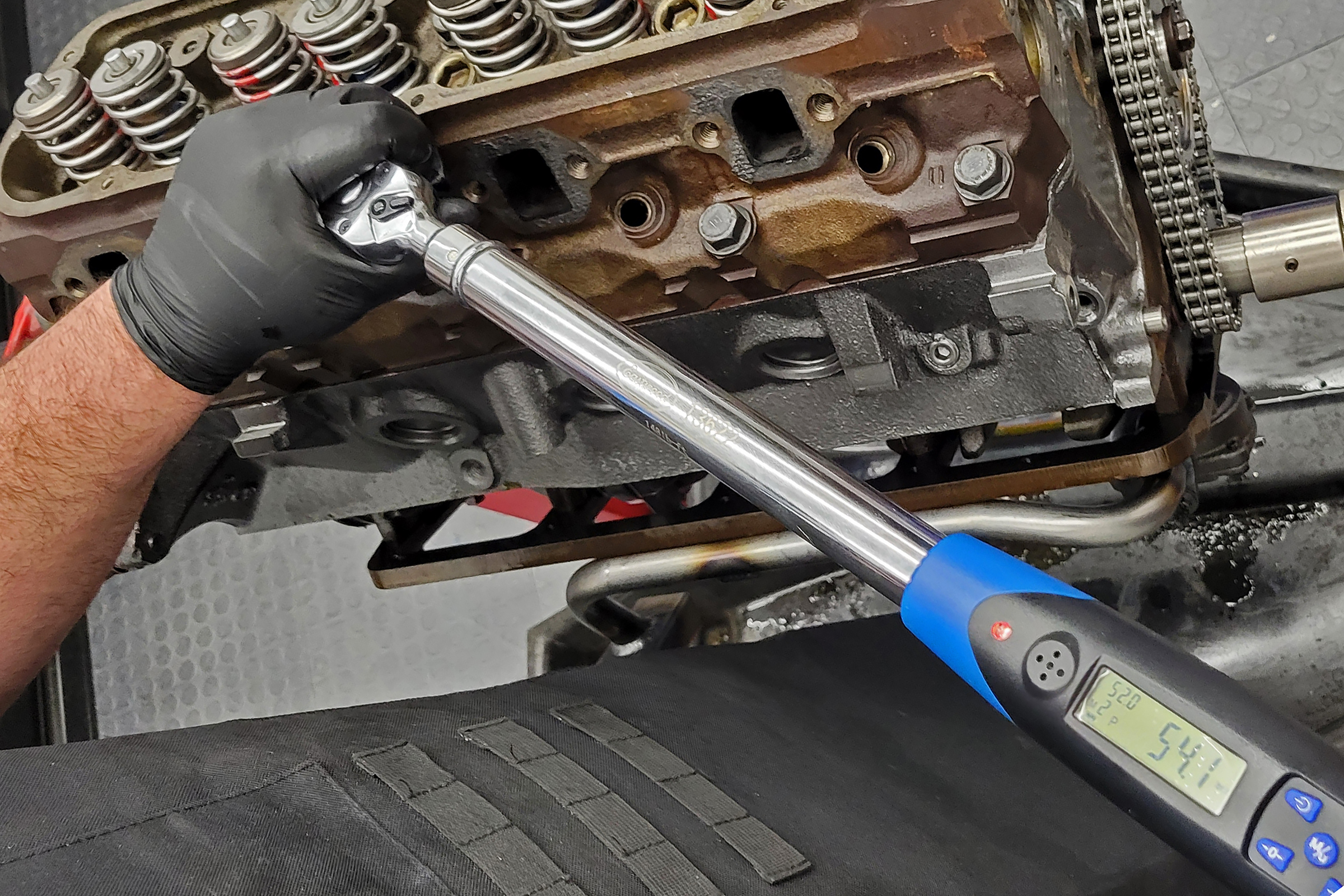
Torque and Clamping Force: Why Lubricant Choice Matters
Engine builders depend on torque wrenches, but torque alone doesn't tell the whole story. Friction can dramatically change clamping force.
 www.enginelabs.com
