
sixtentouge
Totally Hooked
- Aug 28, 2023
- 206
- 844
Overall, it's a "motorsport" part. I've spent a good chunk of my life street-driving cars with very rigid mounts (or even solid mounts), triple-plate, un-sprung metal clutches, dog transmissions, etc. So I'm probably a little more immune to the annoyance of NVH than the average person. That said...here's my take.
The good: There's a directness from the engine to the wheels that you didn't know was missing. Like the difference between an old non-lockup torque converter automatic vs. a DTC. It's that much different. How the car feels at higher revs when modulating the throttle out of a corner is lightyears better. The clutch feels a lot more on-off, which is a good thing, or a bad thing. Good if you can properly drive a manual car, bad if you suck at clutch pedal modulation, that soft buffer is now gone.
The transmission is cable-shifted, with the cables bracketed at the shifter and transmission, so a little rock in the transmission shouldn't make much of a difference...but it does. The shift feel is much better.
2,000 rpm and up, there's little to no NVH that's annoying. It has the connected feel of a high-strung NA engine with hard mounts, where you can feel every hit of every cylinder, but in a good way. You can feel the engine the way it's supposed to be felt.
The Bad: That cold start period where the controller opens the throttle, and retards the timing to heat the cat for 30 seconds, or so? Yea... Racecar. You know how sometimes you can hear a noise in the center of your brain, with harmonics that will blur your vision and have you questioning reality? It's a lot like that.
When everything settles, engine warm, and idle at 1,000 rpm, It's just a slight buzz. Well within my threshold for NVH, but maybe not for some. I don't spend much time at idle, so whatever.
"Max q" is around 1,500 rpm. Every time you step on the go-pedal to raise the revs off of idle, where the engine makes the transition through 1,500 rpm, it'll vibrate everything; the dash, your teeth, etc. I can live with it, but other people who may ride in your car will probably need a warning.
My thoughts: I think Toyota overcompensated for the NVH associated with a rowdy 3-pot. They went a bit too "Lexus." IMO, an aftermarket torque-mount is an essential mod for this car. It should be the first thing anyone does, followed by an exhaust, if only to get some sound. It improves the driving experience by a giant leap, and for relatively little money.
I'm guessing that for the average person, the Cusco mount is not the go. I haven't experienced any of the other poly mounts, but there are probably better ones, with a better compromise for getting through cold start and that 1,500-rpm zone, while not losing much of the directness. I may experiment with "gutting" the stock mount and pouring a few different poly bushings with different D. Or I may just buy one that has replaceable bushings like the one from DNA. Time will tell.
Anyway, the verdict is that this is a motorsport part, and for most people who daily this car, it's best suited for dedicated circuit cars.
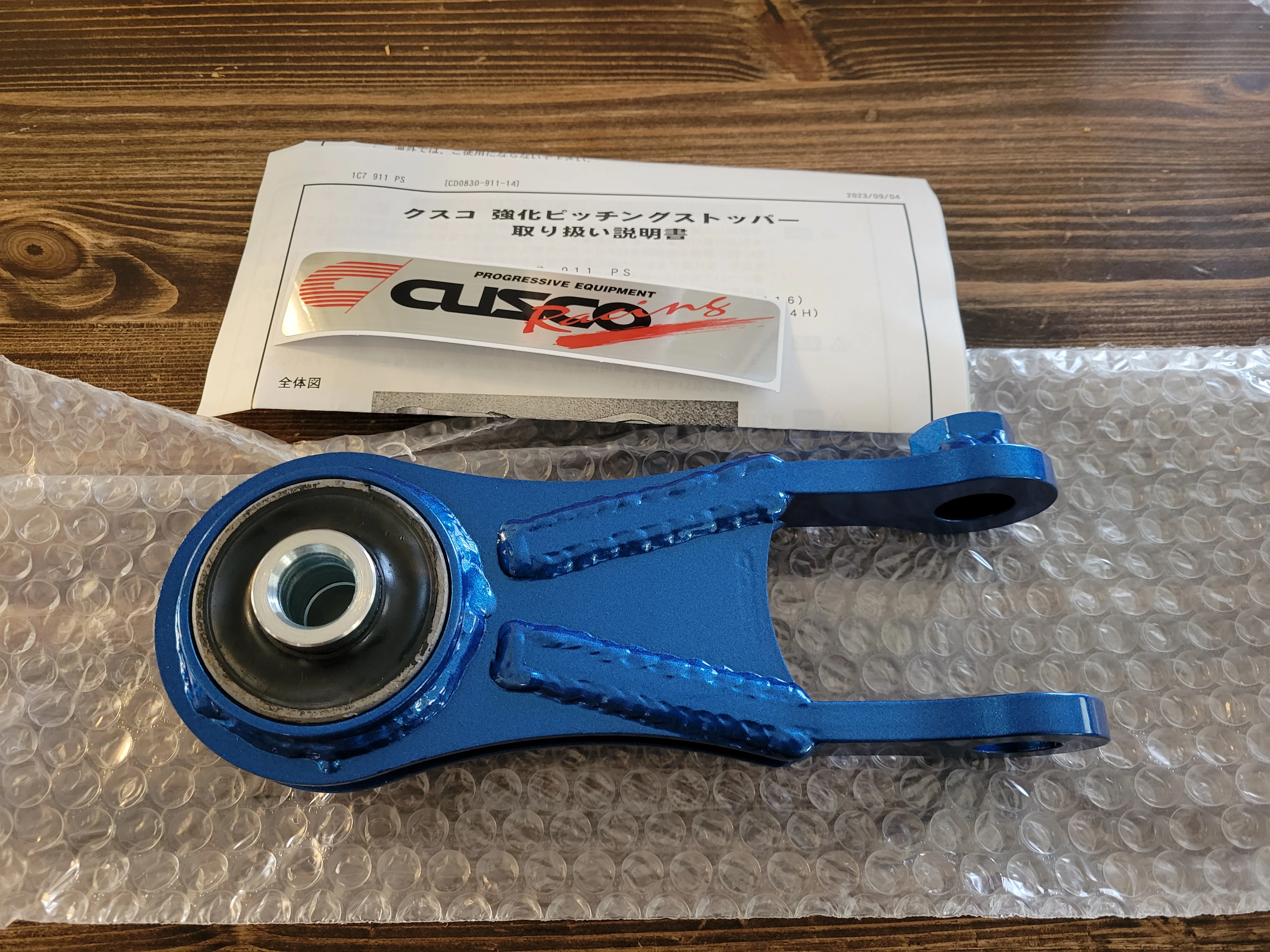
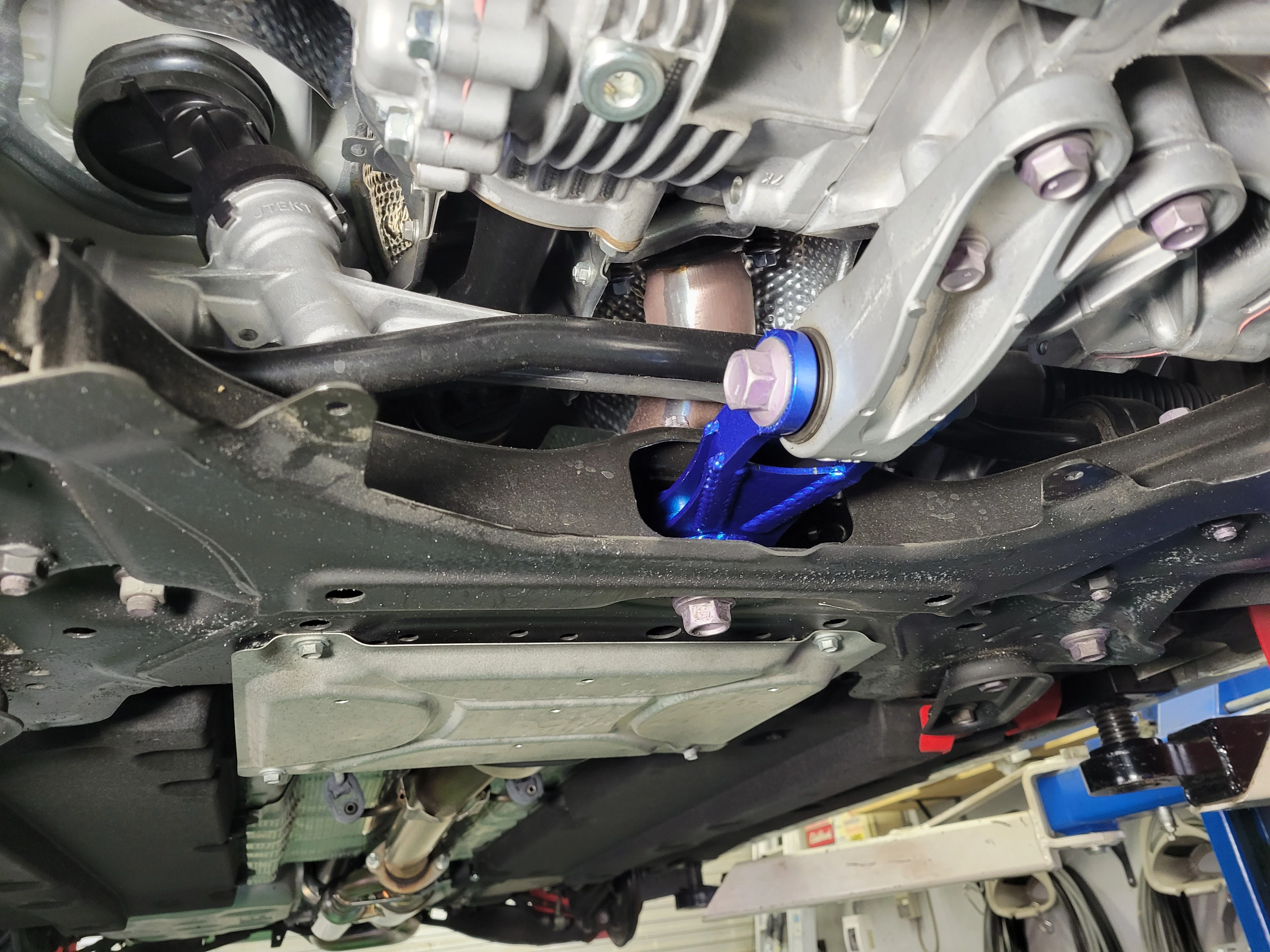
The good: There's a directness from the engine to the wheels that you didn't know was missing. Like the difference between an old non-lockup torque converter automatic vs. a DTC. It's that much different. How the car feels at higher revs when modulating the throttle out of a corner is lightyears better. The clutch feels a lot more on-off, which is a good thing, or a bad thing. Good if you can properly drive a manual car, bad if you suck at clutch pedal modulation, that soft buffer is now gone.
The transmission is cable-shifted, with the cables bracketed at the shifter and transmission, so a little rock in the transmission shouldn't make much of a difference...but it does. The shift feel is much better.
2,000 rpm and up, there's little to no NVH that's annoying. It has the connected feel of a high-strung NA engine with hard mounts, where you can feel every hit of every cylinder, but in a good way. You can feel the engine the way it's supposed to be felt.
The Bad: That cold start period where the controller opens the throttle, and retards the timing to heat the cat for 30 seconds, or so? Yea... Racecar. You know how sometimes you can hear a noise in the center of your brain, with harmonics that will blur your vision and have you questioning reality? It's a lot like that.
When everything settles, engine warm, and idle at 1,000 rpm, It's just a slight buzz. Well within my threshold for NVH, but maybe not for some. I don't spend much time at idle, so whatever.
"Max q" is around 1,500 rpm. Every time you step on the go-pedal to raise the revs off of idle, where the engine makes the transition through 1,500 rpm, it'll vibrate everything; the dash, your teeth, etc. I can live with it, but other people who may ride in your car will probably need a warning.
My thoughts: I think Toyota overcompensated for the NVH associated with a rowdy 3-pot. They went a bit too "Lexus." IMO, an aftermarket torque-mount is an essential mod for this car. It should be the first thing anyone does, followed by an exhaust, if only to get some sound. It improves the driving experience by a giant leap, and for relatively little money.
I'm guessing that for the average person, the Cusco mount is not the go. I haven't experienced any of the other poly mounts, but there are probably better ones, with a better compromise for getting through cold start and that 1,500-rpm zone, while not losing much of the directness. I may experiment with "gutting" the stock mount and pouring a few different poly bushings with different D. Or I may just buy one that has replaceable bushings like the one from DNA. Time will tell.
Anyway, the verdict is that this is a motorsport part, and for most people who daily this car, it's best suited for dedicated circuit cars.


