GR Yaris Oil Cooler Pressure Drop

sixtentouge

Totally Hooked
Joined
Aug 28, 2023
Messages
206
Reaction score
839
Put an oil cooler in yesterday, and just like that, the oil cooler is back out... I've never had an issue with a 10-row Setrab oil cooler on 1.6 liter engines. Like a few psi pressure drop, at most. 11psi pressure drop between the thermostat being open and closed on this system. First thought is that the Toyota G16E is moving a lot of oil. Each piston has three cooling jets, and so on.


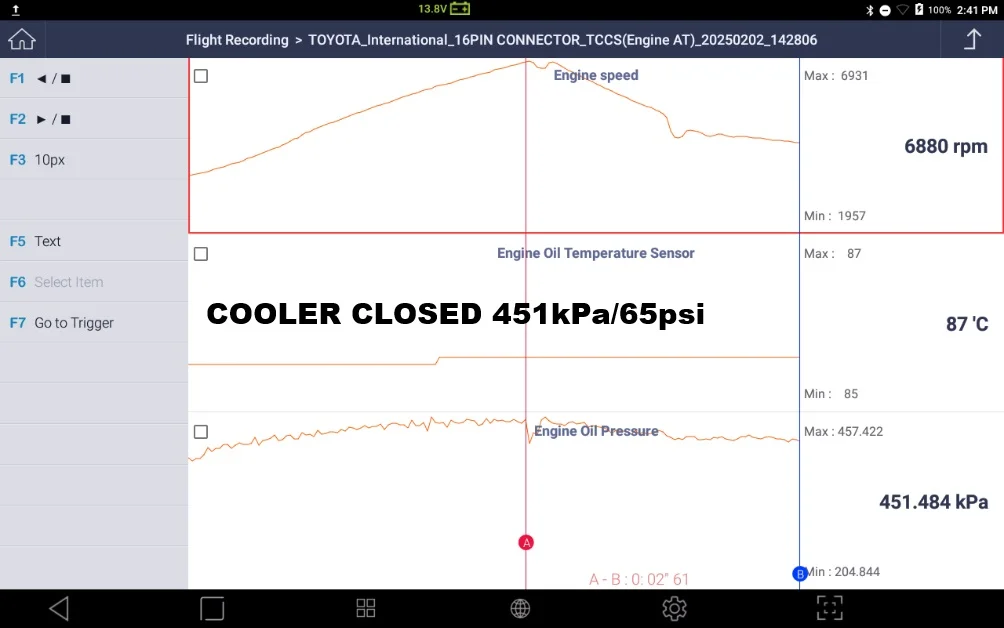
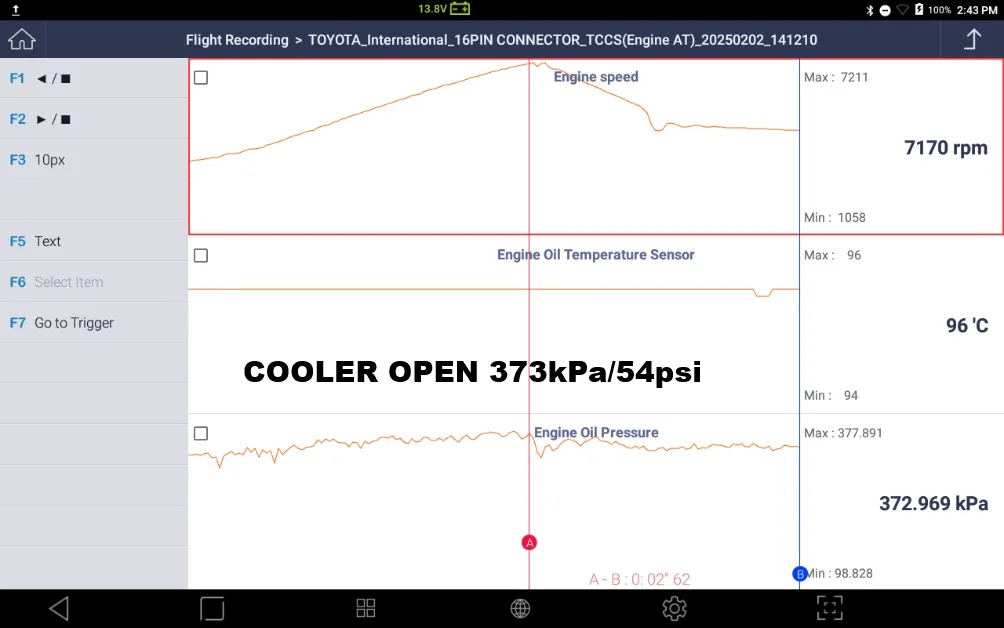
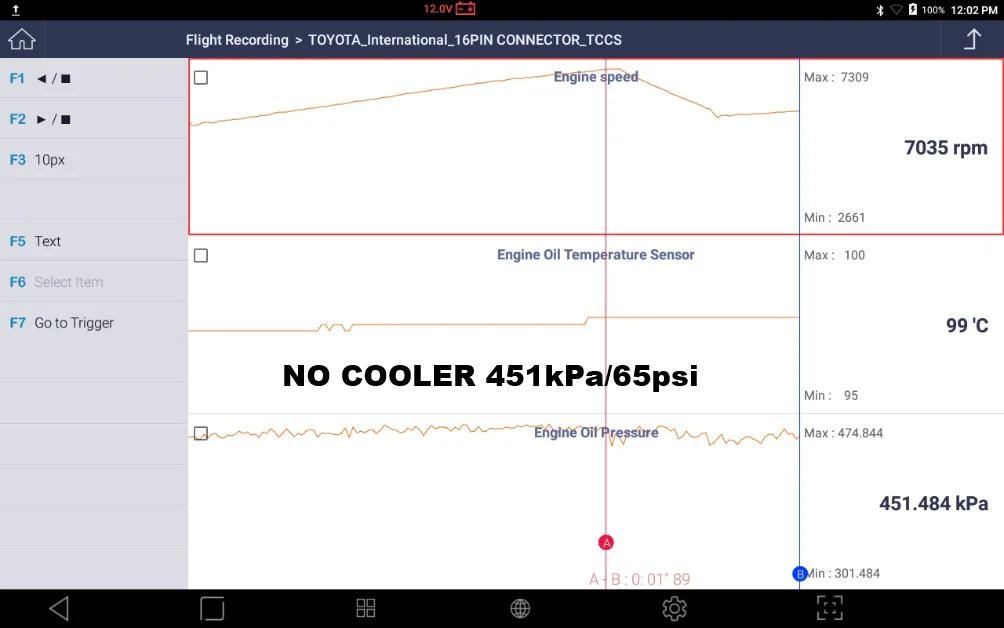
Sandwich block shows no restriction, as a pull under 92°C, with the thermostat closed and the oil bypassing shows the same pressure as stock. Then a pull at 96°C, with the thermostat open and oil switched to the external core shows a 78kPa/11psi drop. So in we go...


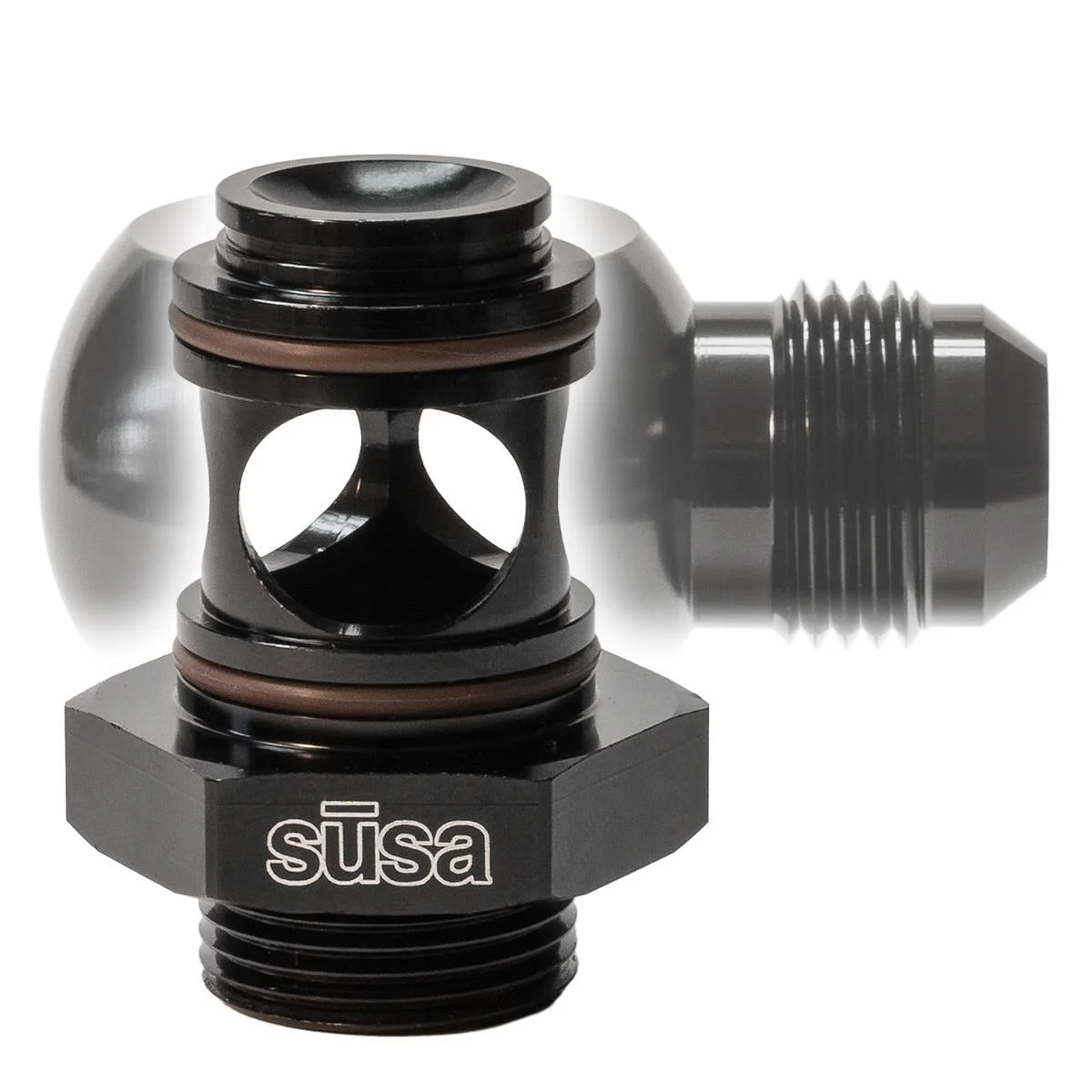
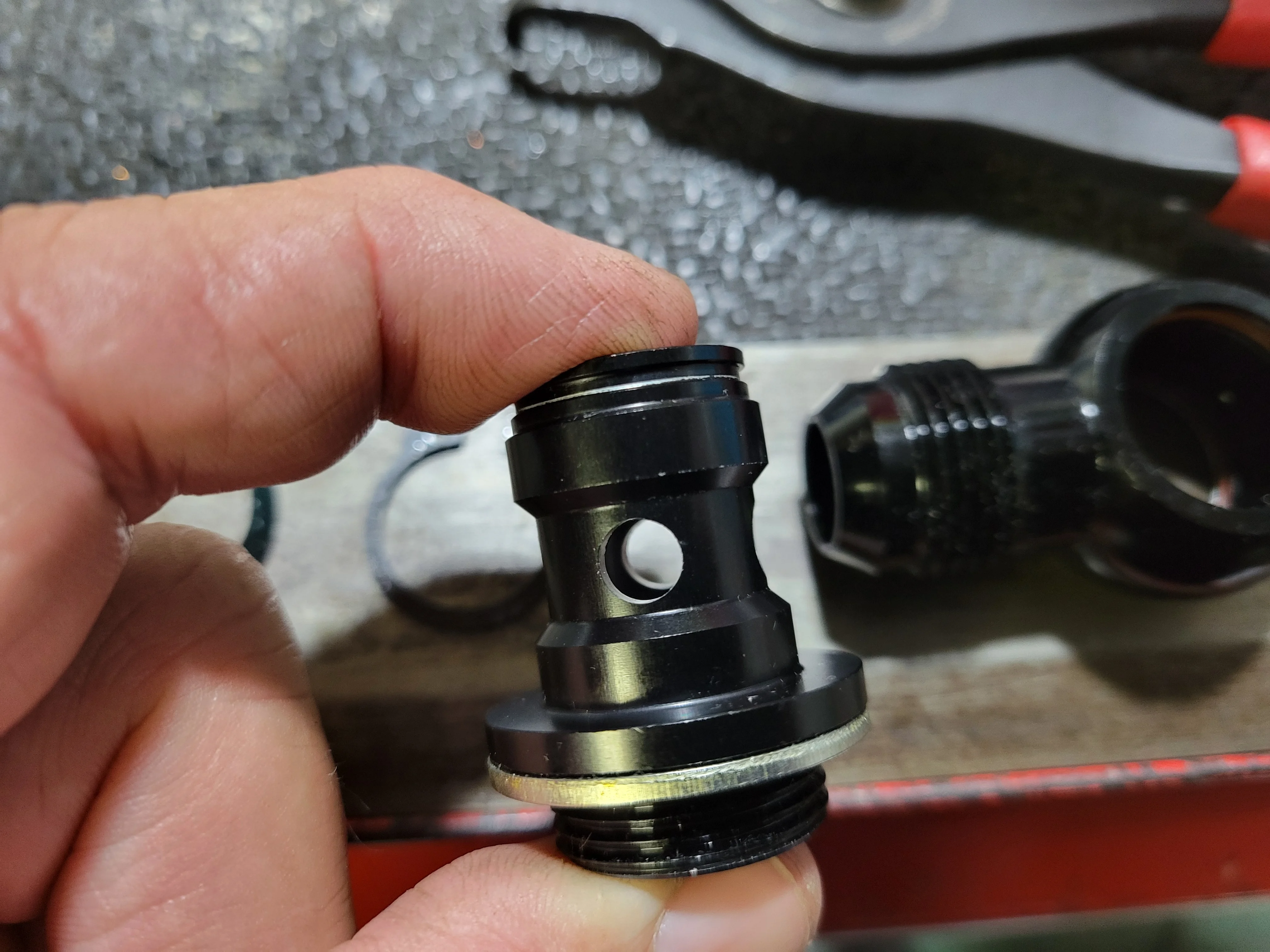
Some oil leakage from the banjo fittings got me interested (WTF?), and what I thought were Setrab Proline High-flow banjo fittings are some kind of Chinese garbage with 6mm holes. Four 6mm holes has the same flow area as a -10, but it's not the same flow when it has to go through four 6mm holes, and at a 90° angle...and it's squeezing through four of these fittings. I found the company that sells the fittings. Some company called Torques in the UK with a Facebook page and whose website address is just a redirect to an Ebay store. We know what that means...


And this is why I spend so much time testing shit, and don't just bolt stuff on assuming it'll be good to go. The modern go is for companies to think of a part they can sell, then make up some "problem" they "found," and blow up the problem with the car on the Internet to sell the "solution." Many times, the solution is actually a performance and reliability downgrade because they never even bother to...test...the part.


I'm a little angry, so sorry about the words. I don't even want my money back, and I'm not willing to buy the Setrab fittings to see if that fixes it because I don't want to do someone else's R&D. Does no one even test parts before selling anymore? I bought this kit because I don't want to cut the front of the car apart. Bolt-on.

So I'm going with the larger heat exchanger from the Corolla and a larger radiator.

Oil pressure log pics are self-explanatory. The fitting pics are the one I took apart from this kit vs. a real Setrab Proline version.
Cooler Closed S.webp


Cooler Open S.webp


Pre Cooler S.webp


20250202_200102.webp


464347872_8529247800476269_8752653546486503923_n.webp
 
Put an oil cooler in yesterday, and just like that, the oil cooler is back out... I've never had an issue with a 10-row Setrab oil cooler on 1.6 liter engines. Like a few psi pressure drop, at most. 11psi pressure drop between the thermostat being open and closed on this system. First thought is that the Toyota G16E is moving a lot of oil. Each piston has three cooling jets, and so on.


Sandwich block shows no restriction, as a pull under 92°C, with the thermostat closed and the oil bypassing shows the same pressure as stock. Then a pull at 96°C, with the thermostat open and oil switched to the external core shows a 78kPa/11psi drop. So in we go...


Some oil leakage from the banjo fittings got me interested (WTF?), and what I thought were Setrab Proline High-flow banjo fittings are some kind of Chinese garbage with 6mm holes. Four 6mm holes has the same flow area as a -10, but it's not the same flow when it has to go through four 6mm holes, and at a 90° angle...and it's squeezing through four of these fittings. I found the company that sells the fittings. Some company called Torques in the UK with a Facebook page and whose website address is just a redirect to an Ebay store. We know what that means...


And this is why I spend so much time testing shit, and don't just bolt stuff on assuming it'll be good to go. The modern go is for companies to think of a part they can sell, then make up some "problem" they "found," and blow up the problem with the car on the Internet to sell the "solution." Many times, the solution is actually a performance and reliability downgrade because they never even bother to...test...the part.


I'm a little angry, so sorry about the words. I don't even want my money back, and I'm not willing to buy the Setrab fittings to see if that fixes it because I don't want to do someone else's R&D. Does no one even test parts before selling anymore? I bought this kit because I don't want to cut the front of the car apart. Bolt-on.

So I'm going with the larger heat exchanger from the Corolla and a larger radiator.

Oil pressure log pics are self-explanatory. The fitting pics are the one I took apart from this kit vs. a real Setrab Proline version.
Valid comment and that setrab banjo looks much better.
Ive used this and had no issues so far although not as neat design as setrab’s - maybe need to go for those aswell.

Have had no leak issues with these ones though

 
Put an oil cooler in yesterday, and just like that, the oil cooler is back out... I've never had an issue with a 10-row Setrab oil cooler on 1.6 liter engines. Like a few psi pressure drop, at most. 11psi pressure drop between the thermostat being open and closed on this system. First thought is that the Toyota G16E is moving a lot of oil. Each piston has three cooling jets, and so on.
Have you performed tests on the stationary car or while driving?
Was the oil cooler receiving airflow?
What is the exact model of the oil cooler?
 
Put an oil cooler in yesterday, and just like that, the oil cooler is back out... I've never had an issue with a 10-row Setrab oil cooler on 1.6 liter engines. Like a few psi pressure drop, at most. 11psi pressure drop between the thermostat being open and closed on this system. First thought is that the Toyota G16E is moving a lot of oil. Each piston has three cooling jets, and so on.


Sandwich block shows no restriction, as a pull under 92°C, with the thermostat closed and the oil bypassing shows the same pressure as stock. Then a pull at 96°C, with the thermostat open and oil switched to the external core shows a 78kPa/11psi drop. So in we go...


Some oil leakage from the banjo fittings got me interested (WTF?), and what I thought were Setrab Proline High-flow banjo fittings are some kind of Chinese garbage with 6mm holes. Four 6mm holes has the same flow area as a -10, but it's not the same flow when it has to go through four 6mm holes, and at a 90° angle...and it's squeezing through four of these fittings. I found the company that sells the fittings. Some company called Torques in the UK with a Facebook page and whose website address is just a redirect to an Ebay store. We know what that means...


And this is why I spend so much time testing shit, and don't just bolt stuff on assuming it'll be good to go. The modern go is for companies to think of a part they can sell, then make up some "problem" they "found," and blow up the problem with the car on the Internet to sell the "solution." Many times, the solution is actually a performance and reliability downgrade because they never even bother to...test...the part.


I'm a little angry, so sorry about the words. I don't even want my money back, and I'm not willing to buy the Setrab fittings to see if that fixes it because I don't want to do someone else's R&D. Does no one even test parts before selling anymore? I bought this kit because I don't want to cut the front of the car apart. Bolt-on.

So I'm going with the larger heat exchanger from the Corolla and a larger radiator.

Oil pressure log pics are self-explanatory. The fitting pics are the one I took apart from this kit vs. a real Setrab Proline version.
Mmm that's not good.

I don't want to sound like an arse but get rid of the Banjo fittings if they are the cause of the pressure drop and use straight JIC.
 
Or maybe just buy stuff from someone who uses the products they build and sell on their own car. 😉
I have a question regarding your cooler. Do you observe any oil draining from the SLM cooler back to the sump over the oil pump? For example, when checking the oil level after a few days without driving, does the level change?
 
I have a question regarding your cooler. Do you observe any oil draining from the SLM cooler back to the sump over the oil pump? For example, when checking the oil level after a few days without driving, does the level change?
I always check the oil level when the oil is at least still warm. Since the adapter plate with the thermostat is always a few percent open, you‘ll definitely have some oil flowing back into the oilpan after a few days.
 
Have you performed tests on the stationary car or while driving?
Was the oil cooler receiving airflow?
What is the exact model of the oil cooler?
During normal driving, the temp never goes above 85°C, so the external cooler circuit is cut off except for about 10%. 3,000 rpm cruise is exactly the same as pre-install. In fact, it actually runs cooler than coolant temp most of the time die to the 10% bypass at all times to the Setrab core.
 
I have a question regarding your cooler. Do you observe any oil draining from the SLM cooler back to the sump over the oil pump? For example, when checking the oil level after a few days without driving, does the level change?
It was installed for 24 hours, but the next morning, after running, but pre-testing, the oil level in the sump was normal.
 
Just got the price back on the Corolla oil cooler part number 15710-18020 at ¥37,500 (about US$250). It's back-ordered, but I placed an order anyway. When it gets here, I'll let you know if it actually fits a '23 Yaris :) :)
 
The GR Corolla Heat exchanger does fit the Gen1 Yaris, but the size is marginally larger so it didn't help me alot with cooling.
I've been thinking about making a adapter plate and putting a much larger heat exchanger out of a other car but thats still in the plans.

1000025782.webp
 
During normal driving, the temp never goes above 85°C, so the external cooler circuit is cut off except for about 10%. 3,000 rpm cruise is exactly the same as pre-install. In fact, it actually runs cooler than coolant temp most of the time die to the 10% bypass at all times to the Setrab core.
I believe your pressure drop may be influenced not only by the oil cooler system's restriction but also by the oil temperature. While the pictures labeled "NO COOLER" show the oil temperature at 99°C and "COOLER OPEN" at 96°C, this comparison isn't entirely accurate. The 96°C reading for "COOLER OPEN" reflects the oil temperature after it has passed through the cooler. However, the actual oil temperature in the sump—where all the pumping and relieving happens—is significantly higher. Depending on the cooling efficiency, it could be 10–20°C higher, which means thinner oil is more likely to flow easily through a smaller relief valve opening.

For an apples-to-apples comparison, an RPM sweep should be performed with the car stationary, after the oil reaches the desired temperature while driving. This would allow the oil cooler to heat soak, ensuring the oil temperature sensor reflects the same sump temperature.

Additionally, a 10-row cooler isn’t adequate for the G16E engine's power output. Even Setrab's longest 9-series cooler (50-910-7612) is recommended only for a power range of 170–200 HP and has a pressure drop of 6.1 psi. Michael has shared a great Setrab oil cooler comparison table here: https://www.gr-zoo.com/threads/gr-yaris-and-oil-pressure-in-track-use.3169/post-111384
 
I've been thinking about making a adapter plate and putting a much larger heat exchanger out of a other car but thats still in the plans.
The issue with a larger heat exchanger is that you need to run more coolant over the core, and I don't think standard lines will be sufficient.

The Rally2 GRY engine, which uses a heat exchanger for engine oil, shows how thick the coolant lines need to be.

01.webp


I was considering a Laminova heat exchanger, which could be mounted in-line with the coolant radiator hose, but it raises questions about how capable the standard cooling system is.
 
I believe your pressure drop may be influenced not only by the oil cooler system's restriction but also by the oil temperature. While the pictures labeled "NO COOLER" show the oil temperature at 99°C and "COOLER OPEN" at 96°C, this comparison isn't entirely accurate. The 96°C reading for "COOLER OPEN" reflects the oil temperature after it has passed through the cooler. However, the actual oil temperature in the sump—where all the pumping and relieving happens—is significantly higher. Depending on the cooling efficiency, it could be 10–20°C higher, which means thinner oil is more likely to flow easily through a smaller relief valve opening.

For an apples-to-apples comparison, an RPM sweep should be performed with the car stationary, after the oil reaches the desired temperature while driving. This would allow the oil cooler to heat soak, ensuring the oil temperature sensor reflects the same sump temperature.

Additionally, a 10-row cooler isn’t adequate for the G16E engine's power output. Even Setrab's longest 9-series cooler (50-910-7612) is recommended only for a power range of 170–200 HP and has a pressure drop of 6.1 psi. Michael has shared a great Setrab oil cooler comparison table here: https://www.gr-zoo.com/threads/gr-yaris-and-oil-pressure-in-track-use.3169/post-111384

I understand what you're saying, but I've logged this thing to death, starting when it was new. Oil pressure at 100-105°C is consistently in the 450kPa range. When the oil is at 80°C, it's up around 470kPa. All before oil cooler installation. Then I installed the oil cooler and at 96°C, it's 80kPa lower at 7,000 rpm. That's a problem with the oil cooler system. My intent by showing the lower 87°C number was simply showing that the adapter is not a restriction. I'm terrible at saying what I mean...my mind is always racing ahead and gets lost in the fog.

I'm not concerned about the sizing for heat removal being "adequate" for the a HP number. For what I do, the stock cooler is adequate, never going above 120°C. I'm simply supplementing the OE system because 110°C 0W-20 is better than 120°C 0W-20. Setrab publishes all their data for flow vs. pressure drop at 20cSt. 0W-20 is less than 10cSt at 100°C. One issue is that no one but Toyota knows what the oil flow number is for the G16E. For a typical four-cylinder of the past, we assumed about 1gpm per 1,000rpm, so 7gpm at 7,000rpm. That would be 26.5 lpm divided by 10 rows at 2.6 lpm per row. On a 10-row Setrab Proline Series 6, that's a 30kPa loss at 20cSt. We also assume about 10kPa loss through the fittings (using good fittings).

So with an 80kPa loss, either the G16E is flowing a lot more oil that previous "rule of thumb" assumptions, and if it's not, then the fittings are introducing a major restriction.

FWIW, my day job is literally designing, building, and maintaining liquid cooling systems (the hardware and programming the controls). Like 45gpm of PAO kept at 35°F +/- 3°F with a varying heat load up to 100kW.
 
We track test and quantify our parts :) unfortunately we are on GRC only
https://www.555engineer.com/blogs/t...-gr-corolla-track-use-oil-pressure-monitoring

Don't buy cheap kits, you get what you pay for. 10 row cooler is too small for serious track use on this platform, it will heat soak after 3-4 hard laps. Ditch the banjo bolts too
Not doing serious track work, fast winding in Japan. The factory system is adequate, this is only supplementation to bring it down a notch. Also not a "cheap" kit. Uses a Setrab Proline exchanger, and with the exception of the banjos, used Setrab fittings. In-house UK-made anodized billet block with Setrab thermo-pill. Not a lot different than the 555 kit in terms of hardware quality, other than the size of the exchanger (yours looks like a 19-row exchanger) and better-flowing fittings.

In that blog post, you don't list the pressures after the oil cooler install, as it seems to be more about the .5l overfill and oil temps, but just looking at the scatter plots by eye, it looks like a 4-5psi pressure drop with the oil cooler installed, which is on-par and acceptable for an external oil cooler system.
 
Last edited:
The GR Corolla Heat exchanger does fit the Gen1 Yaris, but the size is marginally larger so it didn't help me alot with cooling.
I've been thinking about making a adapter plate and putting a much larger heat exchanger out of a other car but thats still in the plans.

View attachment 34025


Do you have additional cooling for the engine coolant? I also have a Koyo 48mm radiator on order, just for the additional oil cooling load.
 
The issue with a larger heat exchanger is that you need to run more coolant over the core, and I don't think standard lines will be sufficient.

The Rally2 GRY engine, which uses a heat exchanger for engine oil, shows how thick the coolant lines need to be.


I was considering a Laminova heat exchanger, which could be mounted in-line with the coolant radiator hose, but it raises questions about how capable the standard cooling system is.

Yes thats something I did take in consideration as well. The stock coolant lines on the heat exchanger are surprisingly small.
It definitely wouldn't be a quick and easy job but I think its better than a air to air oil cooler if done right.

Do you have additional cooling for the engine coolant? I also have a Koyo 48mm radiator on order, just for the additional oil cooling load.

No I don't have any other cooling mods yet apart from the GR Corolla heat exchanger, but I will be fitting a PWR intercooler and hood vents and see how it holds up.
 
Yes thats something I did take in consideration as well. The stock coolant lines on the heat exchanger are surprisingly small.
It definitely wouldn't be a quick and easy job but I think its better than a air to air oil cooler if done right.


No I don't have any other cooling mods yet apart from the GR Corolla heat exchanger, but I will be fitting a PWR intercooler and hood vents and see how it holds up.
Hi, after installing the GR Corolla heat exchanger, have you noticed any noticeable difference in terms of oil temps?

I assume there is a difference, but would like to know if when you were at 130 degrees now you are 120, 125, or so…
 
Hi, after installing the GR Corolla heat exchanger, have you noticed any noticeable difference in terms of oil temps?

I assume there is a difference, but would like to know if when you were at 130 degrees now you are 120, 125, or so…
I only went to the track with the GR Corolla heat exchanger so its difficult to compare, but I had over 135°C oil temperature even on a cold day.
On street driving I didn't notice any change.
 
Back
Top