GR Yaris Balance of tuning and durability limits

I’m still yet to see a destroyed GR Yaris engine running on stock form. He says there are, with no more data but it is difficult to trust his claims.
There may be a few, nothing odd when there are ~30'000 of them around and that's what warranty is for.

Also the reason I created this thread, it came of the back that these engines were 'indestructible' just because they dynoed for 5s at double the power.... That doesn't make a reliable engine. As time showed, this engine still follows the laws of physics, with strength theory and thermodynamics, and tuning must be done with respect for these...

Increasing boost and therefore combustion pressures and temperatures might have a role in any blowby, not unreasonable when considering the specific torque, in stock form, is among the highest in the industry...
 
Last edited:
As always, Adriano's videos are all over the place. The terminology is a mess, and most of the claims are based on 'trust me, I’m an engineer' or vague references to unnamed experts.

LSPI (Low-Speed Pre-Ignition) is not a new phenomenon — it has been known and studied since at least 2010. While it's still poorly understood in terms of predictability, it's not limited to 3-cylinder engines. And contrary to what was said, it’s not 'mega-blowby'— it's mega-detonation that follows pre-ignition. This occurs when direct injection washes oil residue from the cylinder walls, causing auto-ignition.

The G16E-GTS engine uses low-tension rings, which means ring gaps should be evaluated accordingly. While it's true that low-tension rings scrape off oil less effectively, using 0W-20 oil helps compensate for this. Also, the cylinder wall roughness (RA) is specifically designed for 0W-20 oil, not 5W-30.

It amazes me how some random guy with questionable mechanical knowledge can challenge a team of Toyota engineers, who are at least working with measurable data, while he's just making educated guesses.

In case anyone is interested in learning more about LSPI, feel free to drop me a message. I’d be happy to share a list of recommended articles.
 
Last edited:
As always, Adriano's videos are all over the place. The terminology is a mess, and most of the claims are based on 'trust me, I’m an engineer' or vague references to unnamed experts.

LSPI (Low-Speed Pre-Ignition) is not a new phenomenon — it has been known and studied since at least 2010. While it's still poorly understood in terms of predictability, it's not limited to 4-cylinder engines. And contrary to what was said, it’s not 'mega-blowby'— it's mega-detonation that follows pre-ignition. This occurs when direct injection washes oil residue from the cylinder walls, causing auto-ignition.

The G16E-GTS engine uses low-tension rings, which means ring gaps should be evaluated accordingly. While it's true that low-tension rings scrape off oil less effectively, using 0W-20 oil helps compensate for this. Also, the cylinder wall roughness (RA) is specifically designed for 0W-20 oil, not 5W-30.

It amazes me how some random guy with questionable mechanical knowledge can challenge a team of Toyota engineers, who are at least working with measurable data, while he's just making educated guesses.

In case anyone is interested in learning more about LSPI, feel free to drop me a message. I’d be happy to share a list of recommended articles.
It´s funny that the oil he is recommending could well be one of the causes for catastrophic engine damage, isn’t it?
 
it could be a good guerilla marketing for forged pistons, that is
I’m sure he’s got a deal with some forged pistons/forged engine manufacturer to get something in return for these type of videos.

Wait for the video when he unveils his forged engine, with an amazing review of the branded he has chosen. It will happen. He will get something in return, and most likely will not tell the audience.
 
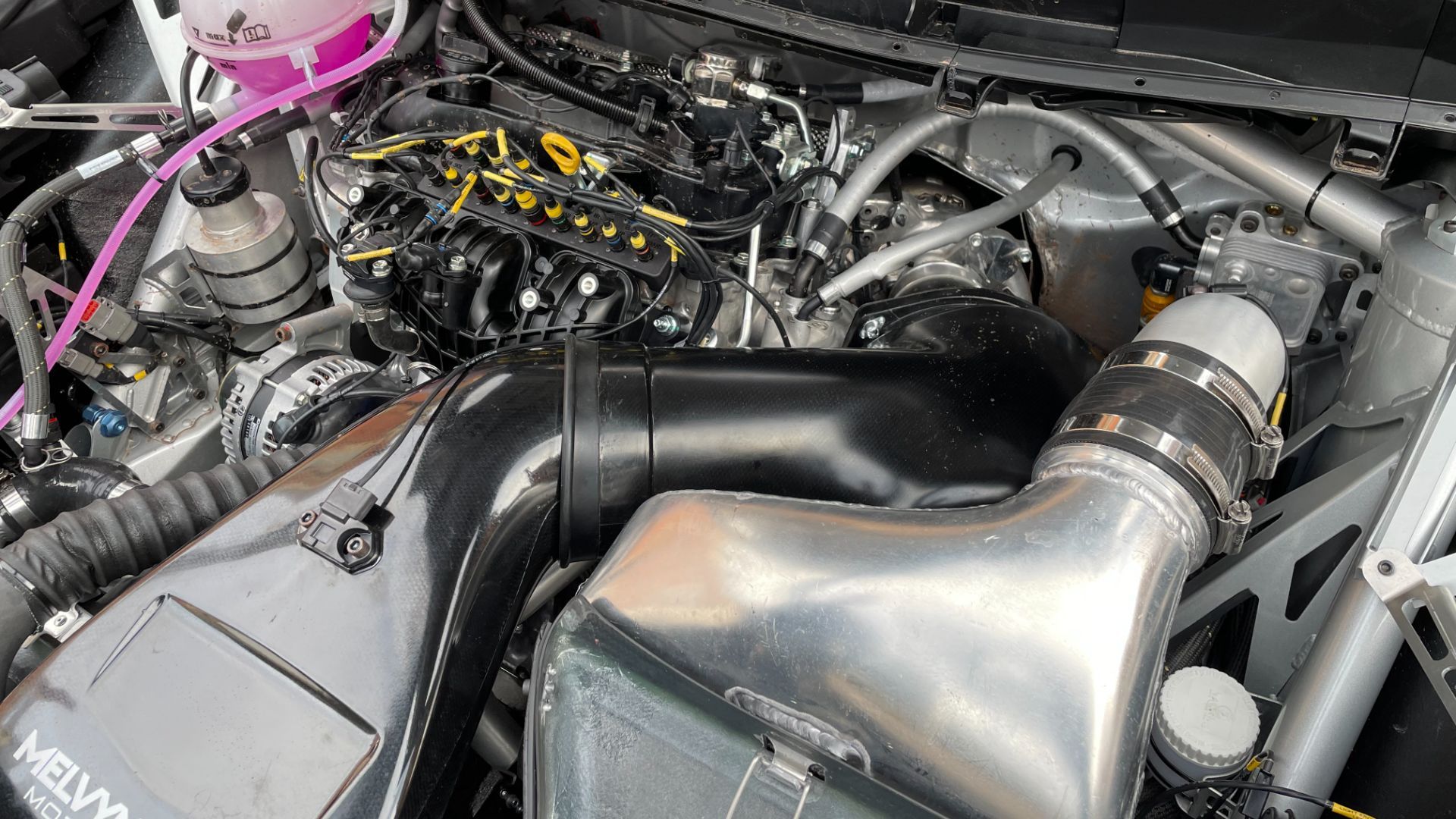
Here are just my two cents on the matter. The G16E-GTS is the most powerful engine of its kind and it's a legitimate racing engine.

img_1890.jpg


That being said you will notice that even in that configuration it makes at most 300 hp. Not 400 or 500.
If you are keen on chasing those kind of numbers then you will have to pay to play. Every legitimate tuner should know this since there is no way around it. You either pay to do it right from the start or you pay later when things go bad. But paying you will do no matter what.

This is how a 450 hp engine looks like from a good tuner
Snapinsta.app_447560395_471422962096281_2164268507788589721_n_1080.jpg


Closed deck rebuild, forged pistons, reinforced rods, etc. Not just increasing boost pressure and hoping for the best.
If you aren't up for all that then just leave it alone.

Toyota provides the longest warranty in the industry and they make no exceptions even with their high performance cars. If your engine blows up in 10 years then so what? Toyota will still put a new one in. So be grateful for what you have.
 
Here are just my two cents on the matter. The G16E-GTS is the most powerful engine of its kind and it's a legitimate racing engine.

img_1890.jpg


That being said you will notice that even in that configuration it makes at most 300 hp. Not 400 or 500.
If you are keen on chasing those kind of numbers then you will have to pay to play. Every legitimate tuner should know this since there is no way around it. You either pay to do it right from the start or you pay later when things go bad. But paying you will do no matter what.

This is how a 450 hp engine looks like from a good tuner
View attachment 31340


Closed deck rebuild, forged pistons, reinforced rods, etc. Not just increasing boost pressure and hoping for the best.
If you aren't up for all that then just leave it alone.

Toyota provides the longest warranty in the industry and they make no exceptions even with their high performance cars. If your engine blows up in 10 years then so what? Toyota will still put a new one in. So be grateful for what you have.
what car is this - looks nice build and based on the chassis it is full monty style.
 
As always, Adriano's videos are all over the place. The terminology is a mess, and most of the claims are based on 'trust me, I’m an engineer' or vague references to unnamed experts.

I've found before roughly half he says is correct, a fourth needs correction and the remaining is just plain wrong. I've tried to discuss a few things but gave up quite soon. He motorsport resume is very short from what I could find. Still I welcome any input, just don believe it's all true/correct...

If his theory would be correct, I would expect catch cans to collect lots of oil, but they barely do so... Other then that, sure it's mega detonation but not much in the way of proof of the cause other then pistons being black on the sides which is completely normal.

I've personally been thinking of some kind of ringland failure quickly followed by a negative blowy and mega donation shattering the piston, the latter erasing all evidence of the former. Due to too high torque with cylinder pressures and heat for the (weakest link) piston, not LSPI per se. But just a theory, not much scoring as could be expected to evidence it unless it happens in very quick succession.
 
Here are just my two cents on the matter. The G16E-GTS is the most powerful engine of its kind and it's a legitimate racing engine.

img_1890.jpg


That being said you will notice that even in that configuration it makes at most 300 hp. Not 400 or 500.
But quite a bit more torque, power being restricted in the intake flow restrictor.

But 100% agree on the morale of the story, increasing power/torque beyond fatory reliably needs to be backed up by all the necessary hardware for the intended use.

And since an engine is a weakest link situation, this might be quite a lot of links...
 
I've found before roughly half he says is correct, a fourth needs correction and the remaining is just plain wrong. I've tried to discuss a few things but gave up quite soon. He motorsport resume is very short from what I could find. Still I welcome any input, just don believe it's all true/correct...

If his theory would be correct, I would expect catch cans to collect lots of oil, but they barely do so... Other then that, sure it's mega detonation but not much in the way of proof of the cause other then pistons being black on the sides which is completely normal.

I've personally been thinking of some kind of ringland failure quickly followed by a negative blowy and mega donation shattering the piston, the latter erasing all evidence of the former. Due to too high torque with cylinder pressures and heat for the (weakest link) piston, not LSPI per se. But just a theory, not much scoring as could be expected to evidence it unless it happens in very quick succession.
Heat and pressure that's the key here to the piston failure on some engines in my option. Increasing boost pressure does not correspond to a linear increase in peak cylinder pressure. Does not work like that. I don't think it's a detonation issue here. No evidence in the other cylinders. High load and time as well. Too much ring gap?. Give me a break. So Toyota engineers have got this wrong.
I am running a Motec. It runs plenty of fuel. It runs rich but it's not just at WOT. You only have to look at the tail pipes after a short run. They are black as.
 
Heat and pressure that's the key here to the piston failure on some engines in my option. Increasing boost pressure does not correspond to a linear increase in peak cylinder pressure. Does not work like that. I don't think it's a detonation issue here. No evidence in the other cylinders. High load and time as well. Too much ring gap?. Give me a break. So Toyota engineers have got this wrong.
I am running a Motec. It runs plenty of fuel. It runs rich but it's not just at WOT. You only have to look at the tail pipes after a short run. They are black as.

It definitely takes a lot of energy to shatter a piston into pieces. I find it hard to imagine that you could reach anything near super-knock levels just by increasing boost and fuel. Take a look at this graph:

Cylinder-pressure-traces-and-heat-release-rates-of-typical-super-knock-conventional.jpg


Note that +5MPa and -5Mpa is an offset to make graph more readable.
 
Here are just my two cents on the matter. The G16E-GTS is the most powerful engine of its kind and it's a legitimate racing engine.

img_1890.jpg


That being said you will notice that even in that configuration it makes at most 300 hp. Not 400 or 500.
If you are keen on chasing those kind of numbers then you will have to pay to play. Every legitimate tuner should know this since there is no way around it. You either pay to do it right from the start or you pay later when things go bad. But paying you will do no matter what.

This is how a 450 hp engine looks like from a good tuner
View attachment 31340


Closed deck rebuild, forged pistons, reinforced rods, etc. Not just increasing boost pressure and hoping for the best.
If you aren't up for all that then just leave it alone.

Toyota provides the longest warranty in the industry and they make no exceptions even with their high performance cars. If your engine blows up in 10 years then so what? Toyota will still put a new one in. So be grateful for what you have.
Everyone knows, that the best engine builds have secret messages on them to make the engine like the new piston…

e23b2bef-8300-4963-a8f0-24a43d138b41.webp
 
Aussies have been running 5w30 for a while now. 0w20 is weak as piss.
This guy is a disaster for the GR owners community. How the heck can he recommend a 5w30 oil to these engines…? He creates a lot of distress for owners, just for a few views.

Use 0w20 ilsac gf-6, do not remap your car if you want it to last, change oil when the manual says, or after a track day or two…and stop worrying people.

I’m still yet to see a destroyed GR Yaris engine running on stock form. He says there are, with no more data but it is difficult to trust his claims.
 
Back
Top