GR Yaris Intercooler Boost pipes

Bronson

Totally Hooked
Joined
Dec 16, 2021
Messages
528
Reaction score
692
Location
Isle of Man
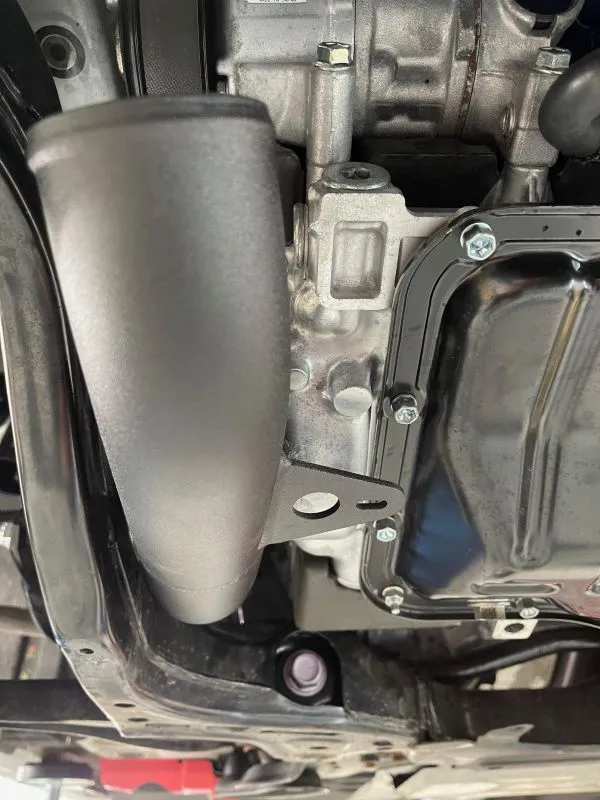
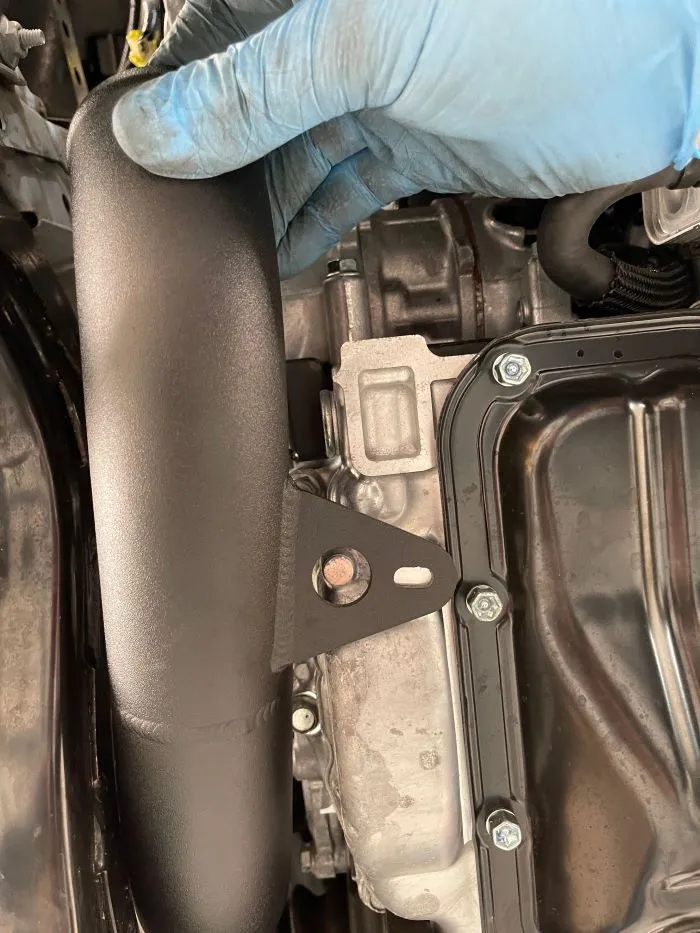
Has anyone else had this issue fitting the Pro Alloy version? Basically the mounting bracket on the boost pipe coming from the turbo is in completely the wrong place OR there should be a thread at the bottom of the engine/bottom of the sump to screw into? I've seen some photos where there is a thread (there is on the other side of the sump), but there isn't on mine. Perhaps a manufacturing fault with the sump?

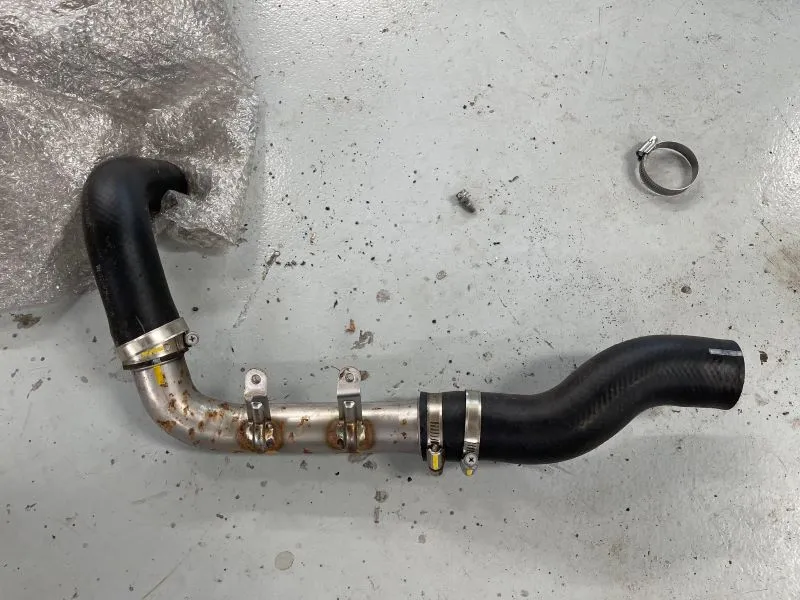
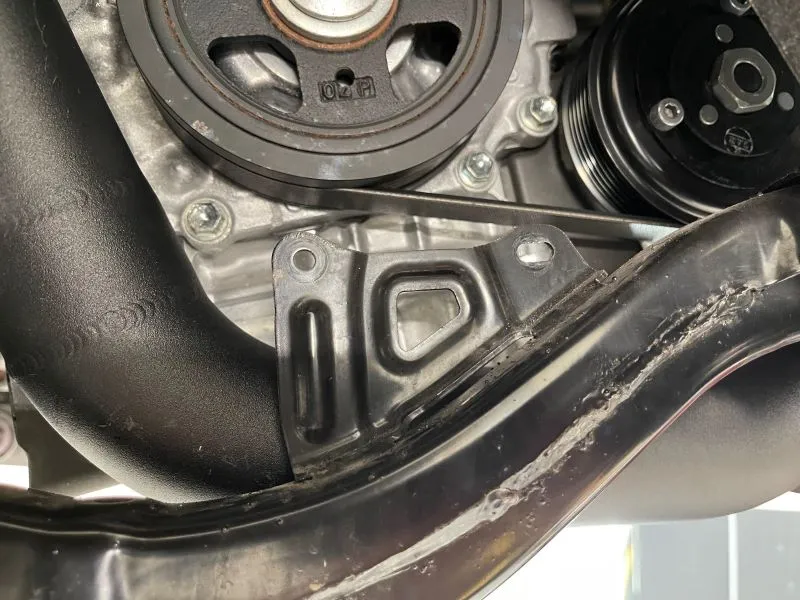
Stock:

unnamed (10).webp


unnamed (11).webp


unnamed (17).webp


unnamed (16).webp
 
IIRC Wagner did not mount to the bottom but to the side - sure you have the pipe correctly placed there?
 
Yeh I saw the Wagner does and yes that’s the only place that pipe could go. Haven’t heard back from Pro Alloy yet, but I wondered if anyone else had a thread in the sump on that side. At the moment the metal pipe is insulated with some rubber pipe and jubilee clipped to the sub frame. I don’t want to drill into the sump!
 
Resolved! So there should be a thread in the sump - apparently early chassis numbers have this, but later ones do not. Pro Alloy have told me their development car had a thread in the sump that could be used to mount this pipe.
 
Are they going to rework the bracket for you then?
 
Resolved! So there should be a thread in the sump - apparently early chassis numbers have this, but later ones do not. Pro Alloy have told me their development car had a thread in the sump that could be used to mount this pipe.
I find it hard to believe that yours is the first that’s made them aware that it’s different but hopefully going forward they’ll rework the design so it’s compatible with all model years.
 
Are they going to rework the bracket for you then?
Nope, unfortunately not. I’m quite happy with the way we resolved it, insulating the pipe and giving it some resistance to vibration. Also used an automotive sealant to stop it rubbing against the sump, as the pipe is significantly bigger than the stock one.

I find it hard to believe that yours is the first that’s made them aware that it’s different but hopefully going forward they’ll rework the design so it’s compatible with all model years.
I hope so too..
 
Nope, unfortunately not. I’m quite happy with the way we resolved it, insulating the pipe and giving it some resistance to vibration. Also used an automotive sealant to stop it rubbing against the sump, as the pipe is significantly bigger than the stock one.


I hope so too..
Wow that’s rubbish. Thanks for posting, it stopped me buying the Intercooler and pipe work
 
Nope, unfortunately not. I’m quite happy with the way we resolved it, insulating the pipe and giving it some resistance to vibration. Also used an automotive sealant to stop it rubbing against the sump, as the pipe is significantly bigger than the stock one.


I hope so too..
not so big task for a aluminum welder if they have a car lift.
 
So what’s the conclusion with larger boost pipes? Larger boost pipes with a larger turbo yes, but what about the OEM turbo and a remap? It seems a big change increasing the Intercooler size and then adding larger boost pipes. I looked on garrets website and it said CFM should be around 200-300. With 2.5” pipes and a CFM of 300 that ends up being 147 but with 1.75 it is 294. The CFM is from DO88 for their Intercooler with pipes so I maybe working with data that is not reflective of the real flow rates from a turbo.

2EFD636E-F8CD-4F66-B7D5-44CB64AFAC3B.webp
 
So what’s the conclusion with larger boost pipes? Larger boost pipes with a larger turbo yes, but what about the OEM turbo and a remap? It seems a big change increasing the Intercooler size and then adding larger boost pipes. I looked on garrets website and it said CFM should be around 200-300. With 2.5” pipes and a CFM of 300 that ends up being 147 but with 1.75 it is 294. The CFM is from DO88 for their Intercooler with pipes so I maybe working with data that is not reflective of the real flow rates from a turbo.
depends on the requirements and system overall but would say adding more air larger pipes are not that bad thing.
Car has been designed nicely to 260hp and anything more, the hw will start to struggle. Have driven a car with zero lag from the larger pipes so difficult to understand this problem.
 
Why not just drill and tap a thread into that boss if earlier cars had one? Will cost you w tap/die set, simple.
Do the metal pipes add moar turbo whooshy noise? I might be keen if someone confirms the extra sound.
 
Why not just drill and tap a thread into that boss if earlier cars had one? Will cost you w tap/die set, simple.
Do the metal pipes add moar turbo whooshy noise? I might be keen if someone confirms the extra sound.
Don't want to drill too deep... How deep?
 
Don't want to drill too deep... How deep?
Exactly. This is a job for a milling machine to ensure it’s true and the depth is controlled. It’s not a job for a hand held drill from under the car.
 
Reply from DO88 regarding larger Intercooler, pipes and lag. Fair play to them, they are responsive to emails and publish their data. Only other data I have seen is Wagner.

52947AB3-3BD6-4720-8F4F-54E1749F468E.webp


69CC5F76-B518-4E38-A4E8-855E85AFD536.webp


27DFDB43-9777-4D8A-BC58-0D7F7DE8566C.webp
 
So what’s the conclusion with larger boost pipes? Larger boost pipes with a larger turbo yes, but what about the OEM turbo and a remap? It seems a big change increasing the Intercooler size and then adding larger boost pipes. I looked on garrets website and it said CFM should be around 200-300. With 2.5” pipes and a CFM of 300 that ends up being 147 but with 1.75 it is 294. The CFM is from DO88 for their Intercooler with pipes so I maybe working with data that is not reflective of the real flow rates from a turbo.
CFM on boosted section post-turbo is defined by engine displacement and rpm, turbo(boost) has no say. So counter intuitively, power levels (because of added boost) play no roll in pressure drop increase, the difference is fixed.
So question is at what rpm do you want response? Revving to redline every gear, lag isn't a big issue, nor is it on track with full view. Lower pressure drop actually helps reducing lag and partly takes away the volume increase in a high flow scenario.

Driving an unknown road waiting for a bend to open up and perhaps in a slightly lower gear then ideal for response (say 3rd at 3200k rpm instead of 2nd at a bit much 5000rpm-ish), lag does matter for driving enjoyment imho, while power gains are less important. Here volume has a role. Anti-lag or, in my case, left foot braking kinda circumvents this but for most it doesn't come natural. But having the IC+(involuntary) boost pipes I wouldn't mind a bit less lag, but I do like the better top end they allow but I would trade it for better response in the above road scenario. It's all a compromise, but it's driving goals that decide imho...

Edit: saw your discussion with do88, I've had the same. The above still applies imho, I'm assuming most customers don't want lag hurting straight line performance, they aren’t talking about road driving finesse...
 
Last edited:
not so big task for a aluminum welder if they have a car lift.
True, but seeing as the sub frame is the mounting point for the original pipe, it was quicker/simpler to shroud the metal pipe in some rubber hose, use some jubilee clips, and some automotive sealant onto the sump just in case the metal pipe rubs up against it.

I read elsewhere that insulating the metal boost pipes is better for cooling.

Plus the original has more flexible hose nearer the turbo, whereas the aftermarket had a very short piece. To ‘soak up’ some vibration, I think our solution was better.

I should have taken a photo of it afterwards, I know it’s a bodge but made the best we could make of it.
 
Don't want to drill too deep... How deep?
Why not just drill and tap a thread into that boss if earlier cars had one? Will cost you w tap/die set, simple.
Do the metal pipes add moar turbo whooshy noise? I might be keen if someone confirms the extra sound.
We had a set ready to go, but I didn’t want to take the risk.
 
CFM on boosted section post-turbo is defined by engine displacement and rpm, turbo(boost) has no say. So counter intuitively, power levels (because of added boost) play no roll in pressure drop increase, the difference is fixed.
So question is at what rpm do you want response? Revving to redline every gear, lag isn't a big issue, nor is it on track with full view. Lower pressure drop actually helps reducing lag and partly takes away the volume increase in a high flow scenario.

Driving an unknown road waiting for a bend to open up and perhaps in a slightly lower gear then ideal for response (say 3rd at 3200k rpm instead of 2nd at a bit much 5000rpm-ish), lag does matter for driving enjoyment imho, while power gains are less important. Here volume has a role. Anti-lag or, in my case, left foot braking kinda circumvents this but for most it doesn't come natural. But having the IC+(involuntary) boost pipes I wouldn't mind a bit less lag, but I do like the better top end they allow but I would trade it for better response in the above road scenario. It's all a compromise, but it's driving goals that decide imho...

Edit: saw your discussion with do88, I've had the same. The above still applies imho, I'm assuming most customers don't want lag hurting straight line performance, they aren’t talking about road driving finesse...
For me it’s all about response from lower rpm 3000 plus or as low as possible really. It pulls nicely up top as it is with the standard Intercooler and Litchfield remap. It’s booked for the new ecutek software in June but I want to get a Intercooler on before so it can be mapped with it. I just really don’t want to find I mess up the responsiveness by going the wrong way with the Intercooler. I think I am set on the DO88 now over Litchfield version. It’s just these pipes that are loosing me sleep now
 
I think you would be doing well to notice any increase in lag by just running larger intercooler piping. Does an increase in diameter of the piping results in an increase in power, I have my doubts even though I am running the PumaSpeed IC with the larger piping.

The OEM throttle body is 49mm diameter. The TB is controlling the airflow which manages engine speed and torque. I all ways think of the TB chocking the engine anytime it is not at WOT. Why run 63mm piping when the TB is 49mm?.
I am sure someone with a better understanding of airflow can make a case regarding larger IC piping.

I think tuning can play a large part in reducing lag and increasing throttle response once you start to Mod.
 
Back
Top