


- Aug 31, 2023
- 180
- 565
- 93
While fitting some cool custom electronics to my Type20 GRY (which I’ll write about later), I had to source 12V power for them.
Some of the common methods include installing a “fuse riser” and hijacking a non-vital fuse (the CANChecked approach), connecting to the OBD-II port (Syvecs), or running power from the power outlet (“cig lighter”) connector.
All these methods are okay-ish, but they aren’t perfect, and they definitely aren’t elegant.
My goal was an OEM-style installation (1), and I believe I’ve found one.
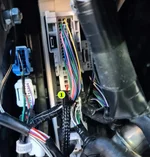
Here’s a short introduction on how the GR Yaris handles power delivery inside the car, to better explain why this method is safe and completely fine.
Power comes from the engine bay and arrives at the PDB (Power Distribution Box), which is located under the left side of the dash and is tightly integrated with the Main Body ECU. The interior fuse box is actually part of the PDB.
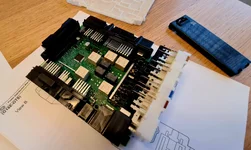
The thing is, Toyota doesn’t bother developing and producing a unique PDB for every single model they make. The one in the GR Yaris is actually shared with the boring Yaris.
Because of this, most of the fuses for the regular Yaris are already pre-installed, like the rear wiper – “WIPER RR” (2), the rear side doors “DOOR R/R” (3) and “DOOR R/L” (4). Which is nice.
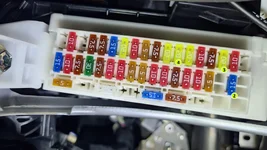
If you check the PDB internal diagram of the boring Yaris on the left vs GR Yaris on the right, it shows that these fuses for the GRY are missing. But they’re not.


The PDB plug we’re interested in is called 4E. “WIPER RR” (pin No. 16 on the 4E plug) receives 12V when the ignition is turned on, while “DOOR R/R” (4E pin No. 13) and “DOOR R/L” (4E pin No. 34) have constant 12V from the battery.
What differs between the GR Yaris and the standard Yaris is the wiring harness. There are no wires for the terminals mentioned above in the GR Yaris wiring harness, so those positions in the 4E plug are left empty for us to use. Which is nice.
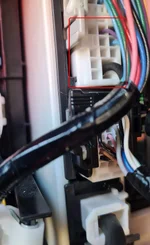
So, how do we take advantage of that? Simply by picking the right hole in the PDB 4E plug and installing a wire with the appropriate crimped terminal.
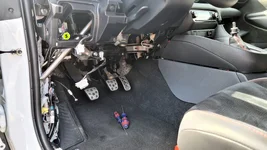
To access the 4E plug on a Type20 LHD GRY, the lower dash trim panel beneath the steering wheel has to be removed.
On RHD cars, the PDB is located behind the glove box, though I can’t say for sure if anything besides the glove box needs to be removed to access it.
Conveniently, the 4E plug is facing the driver and not the firewall side. Which is nice.
Here are the locations of the pins we identified in the PDB internal schematics:
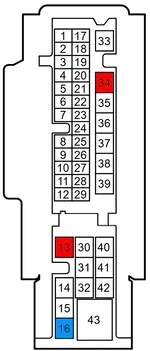
Red – Constant 12V from the battery.
Blue -12V when the ignition is turned on or the engine is running.
All the pins use terminal part No. 82998-24350, which is actually a pigtail with 160 mm of wire and the terminal already crimped onto it.

To unplug the 4E connector, press the locking tab and lift the plug latch. That will automatically release the plug.
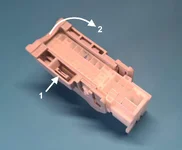
To insert the terminals into the empty slots, you first have to lift the terminal retainer.
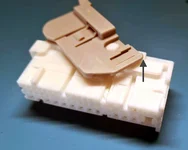
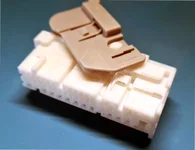
Now insert the terminal until you hear a click. Close the retainer, insert the plug, and you’re done.
You now have a clean installation, providing constant or ignition switch controlled power from a dedicated fuse.
Which is nice.
Some of the common methods include installing a “fuse riser” and hijacking a non-vital fuse (the CANChecked approach), connecting to the OBD-II port (Syvecs), or running power from the power outlet (“cig lighter”) connector.
All these methods are okay-ish, but they aren’t perfect, and they definitely aren’t elegant.
My goal was an OEM-style installation (1), and I believe I’ve found one.
Here’s a short introduction on how the GR Yaris handles power delivery inside the car, to better explain why this method is safe and completely fine.
Power comes from the engine bay and arrives at the PDB (Power Distribution Box), which is located under the left side of the dash and is tightly integrated with the Main Body ECU. The interior fuse box is actually part of the PDB.
The thing is, Toyota doesn’t bother developing and producing a unique PDB for every single model they make. The one in the GR Yaris is actually shared with the boring Yaris.
Because of this, most of the fuses for the regular Yaris are already pre-installed, like the rear wiper – “WIPER RR” (2), the rear side doors “DOOR R/R” (3) and “DOOR R/L” (4). Which is nice.
If you check the PDB internal diagram of the boring Yaris on the left vs GR Yaris on the right, it shows that these fuses for the GRY are missing. But they’re not.
The PDB plug we’re interested in is called 4E. “WIPER RR” (pin No. 16 on the 4E plug) receives 12V when the ignition is turned on, while “DOOR R/R” (4E pin No. 13) and “DOOR R/L” (4E pin No. 34) have constant 12V from the battery.
What differs between the GR Yaris and the standard Yaris is the wiring harness. There are no wires for the terminals mentioned above in the GR Yaris wiring harness, so those positions in the 4E plug are left empty for us to use. Which is nice.
So, how do we take advantage of that? Simply by picking the right hole in the PDB 4E plug and installing a wire with the appropriate crimped terminal.
To access the 4E plug on a Type20 LHD GRY, the lower dash trim panel beneath the steering wheel has to be removed.
On RHD cars, the PDB is located behind the glove box, though I can’t say for sure if anything besides the glove box needs to be removed to access it.
Conveniently, the 4E plug is facing the driver and not the firewall side. Which is nice.
Here are the locations of the pins we identified in the PDB internal schematics:
Red – Constant 12V from the battery.
Blue -12V when the ignition is turned on or the engine is running.
All the pins use terminal part No. 82998-24350, which is actually a pigtail with 160 mm of wire and the terminal already crimped onto it.
To unplug the 4E connector, press the locking tab and lift the plug latch. That will automatically release the plug.
To insert the terminals into the empty slots, you first have to lift the terminal retainer.
Now insert the terminal until you hear a click. Close the retainer, insert the plug, and you’re done.
You now have a clean installation, providing constant or ignition switch controlled power from a dedicated fuse.
Which is nice.


