GR Yaris Review - HEL Engine Oil Cooler Kit - C-Tec

RichM

Obsessed member
Joined
Jan 16, 2023
Messages
210
Reaction score
363
Location
North Notts
Good Evening Folks,

I've recently had a HEL Oil Cooler kit fitted by Nigel at C-Tec, so I thought I'd share thoughts in case of interest or use to forum members.

My GRY use is exclusively for spirited B road drives, no commuting, no track work. Almost always, I'm out early morning for quiet roads, and typically, it's cooler than later on the day.

I like data and numbers and knowing that the GRY is prone to getting warm, using Torque Pro App on my phone and OBDII Bluetooth reader, I have been logging engine oil temp, engine oil pressure, intake temp, CACT and tyre temps. I've been collecting data for 12 months which showed my that engine oil temps were peaking at or just over 110deg C, which I understand is close to the top of the engine oil effective operating window, so I wanted to bring the temps down. There's also some future proofing in mind as I would like to start Euro road trips in future which I hope will include long alpine passes in mid day sun / heat.

I have read stories about cooler installs going wrong so I wanted to leave the install to an expert. Seeing Nigel's attention to detail and quality of working fitting my titanium C-Tec exhaust, it was an easy decision.

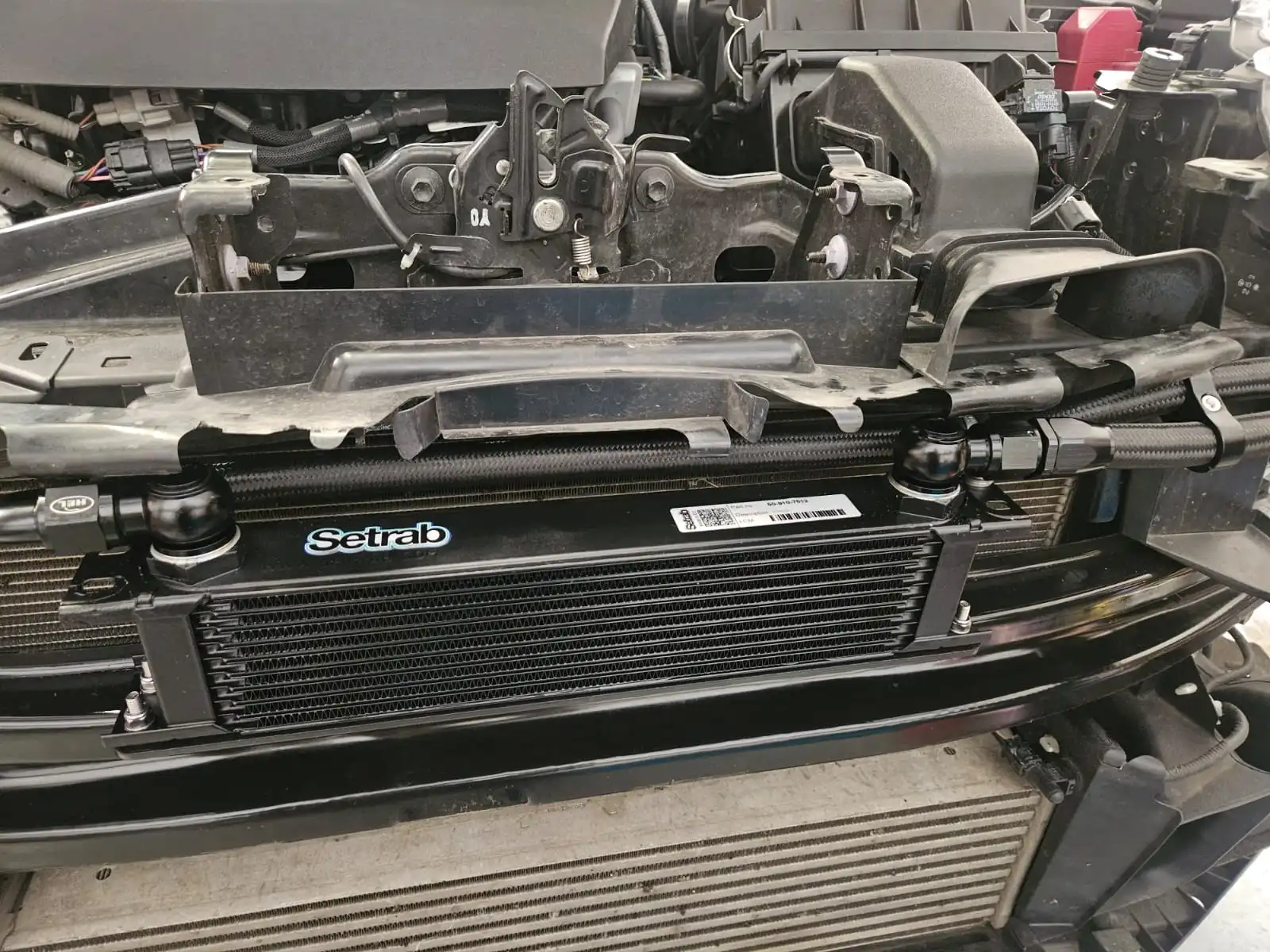
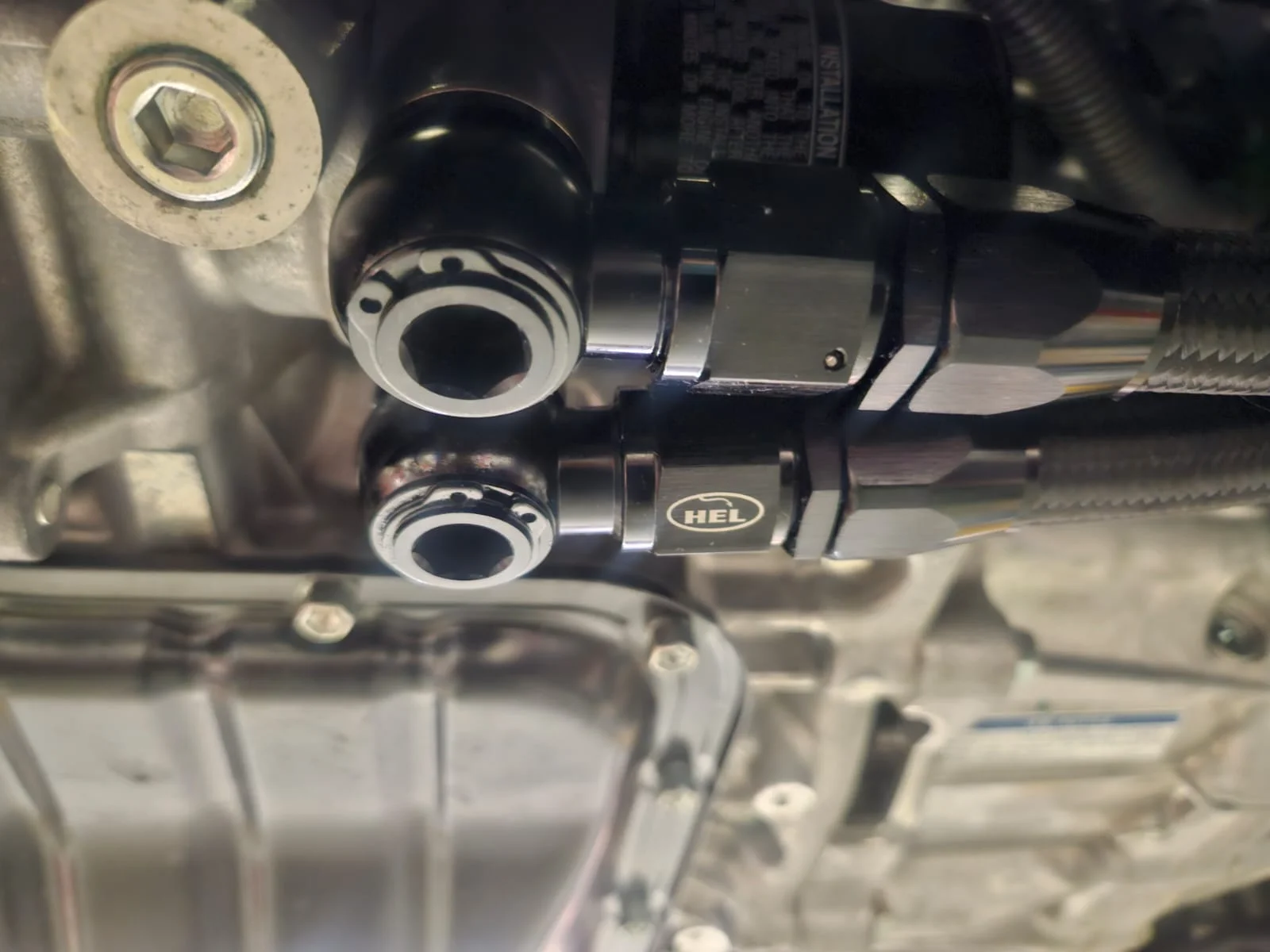
The HEL kit I chose comprises a Setrab Proline 9 Series engine oil cooler, oil filter sandwich plate and braided hoses.

I'm very happy with how well made and installed the kit is, Nigel showed me everything that had been done and checked as part of the install and he explained the correct process for filling the oil cooler to avoid air bubbles, possibly obvious to some but not to me.

So, the results..I've been on two typical spirited B road drives in the last month so have two post instal data sets. Both drives show max oil temp at 95degC, so in my use case, based on the data I have collected, there is a clear 15degC reduction from 110degC to 95degC as a result of the cooler, which I am really pleased with.

It's also worth mentioning that the cooler is thermostat activated so only when oil is up to temp does the cooler kick in. Also, I opted for a 9 series cooler which is typically recommended for track use, with a 6 series cooler typically recommended for fast road use. I discussed pros and cons with Nigel, and as the cost of the 9 series is less than £100 more than 6 series, I was in !

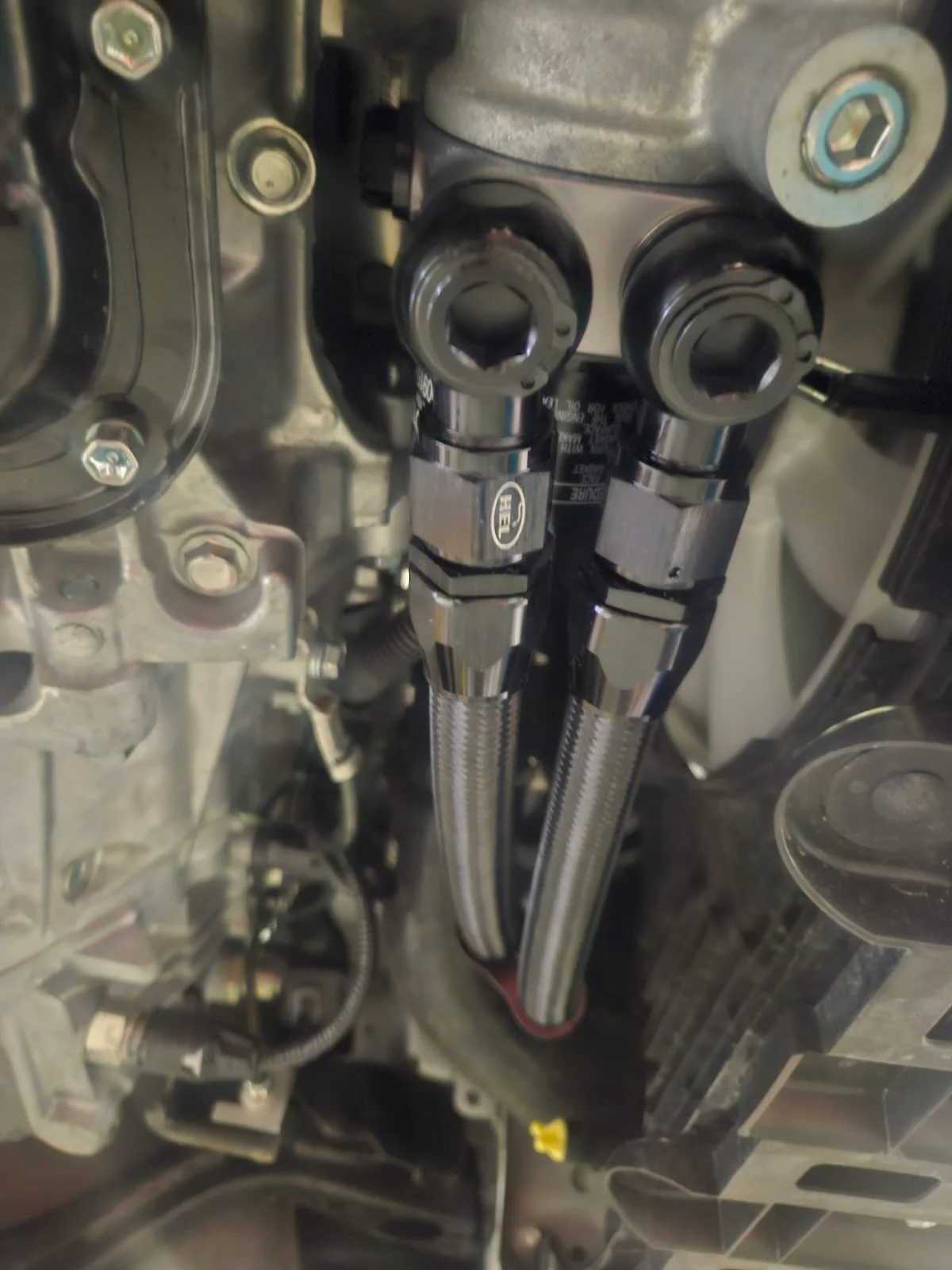
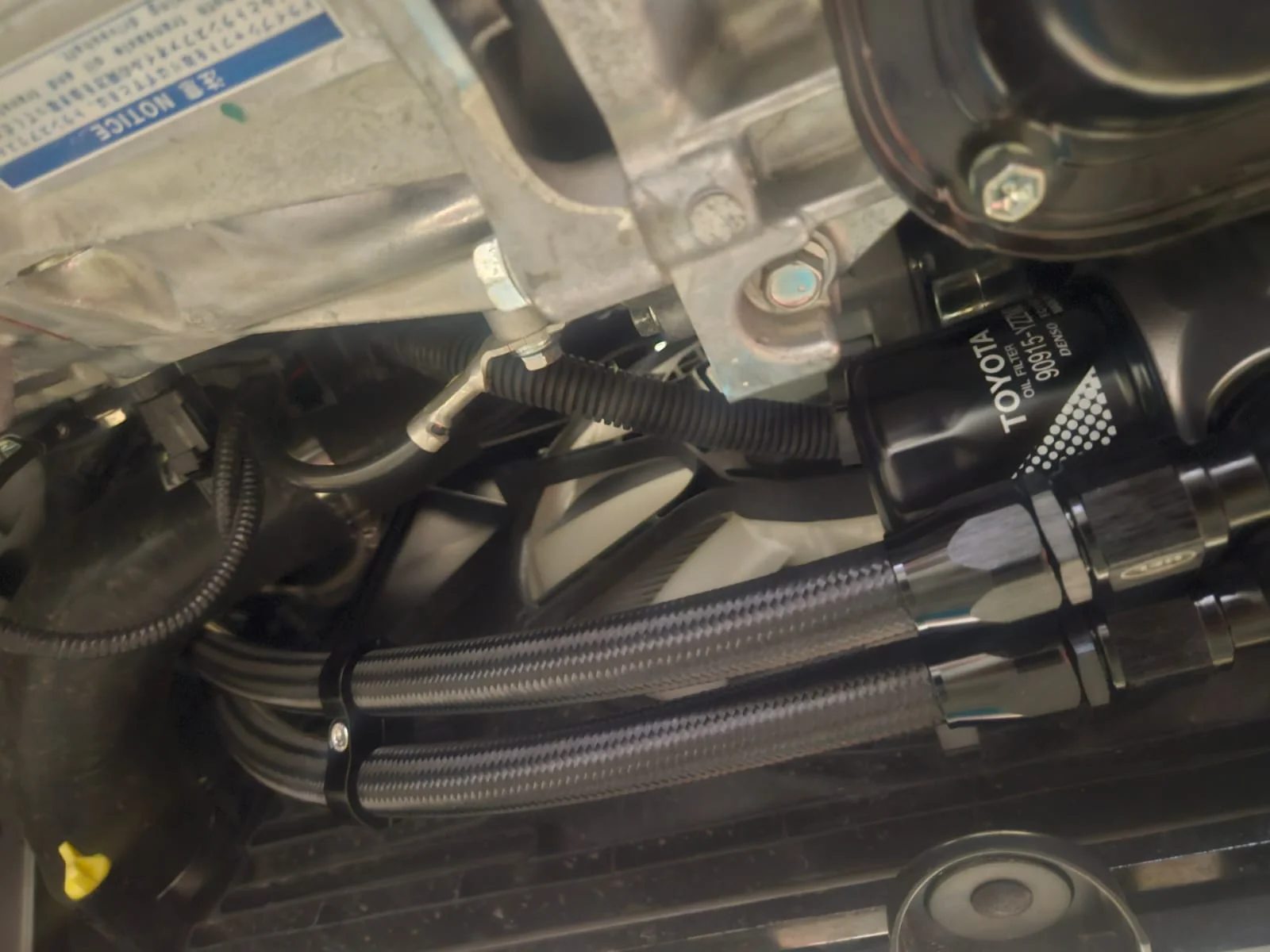
I've attached graphs of before and after and some install pics.

There's only one possible drawback for me which is that I wonder if the oil cooler mounting location means I can't fit a Lazer light bar in future which I really fancied at some point..

I'd thoroughly recommend Nigel at C-Tec Rotherham for this, or any other GRY work. When I've been there, there has always been lots of GRYs and Evo's queuing for work.
IMG-20250704-WA0010.webp


IMG-20250704-WA0009.webp


IMG-20250704-WA0008.webp


IMG-20250704-WA0007.webp
 

Attachments

Good Evening Folks,

I've recently had a HEL Oil Cooler kit fitted by Nigel at C-Tec, so I thought I'd share thoughts in case of interest or use to forum members.

My GRY use is exclusively for spirited B road drives, no commuting, no track work. Almost always, I'm out early morning for quiet roads, and typically, it's cooler than later on the day.

I like data and numbers and knowing that the GRY is prone to getting warm, using Torque Pro App on my phone and OBDII Bluetooth reader, I have been logging engine oil temp, engine oil pressure, intake temp, CACT and tyre temps. I've been collecting data for 12 months which showed my that engine oil temps were peaking at or just over 110deg C, which I understand is close to the top of the engine oil effective operating window, so I wanted to bring the temps down. There's also some future proofing in mind as I would like to start Euro road trips in future which I hope will include long alpine passes in mid day sun / heat.

I have read stories about cooler installs going wrong so I wanted to leave the install to an expert. Seeing Nigel's attention to detail and quality of working fitting my titanium C-Tec exhaust, it was an easy decision.

The HEL kit I chose comprises a Setrab Proline 9 Series engine oil cooler, oil filter sandwich plate and braided hoses.

I'm very happy with how well made and installed the kit is, Nigel showed me everything that had been done and checked as part of the install and he explained the correct process for filling the oil cooler to avoid air bubbles, possibly obvious to some but not to me.

So, the results..I've been on two typical spirited B road drives in the last month so have two post instal data sets. Both drives show max oil temp at 95degC, so in my use case, based on the data I have collected, there is a clear 15degC reduction from 110degC to 95degC as a result of the cooler, which I am really pleased with.

It's also worth mentioning that the cooler is thermostat activated so only when oil is up to temp does the cooler kick in. Also, I opted for a 9 series cooler which is typically recommended for track use, with a 6 series cooler typically recommended for fast road use. I discussed pros and cons with Nigel, and as the cost of the 9 series is less than £100 more than 6 series, I was in !

I've attached graphs of before and after and some install pics.

There's only one possible drawback for me which is that I wonder if the oil cooler mounting location means I can't fit a Lazer light bar in future which I really fancied at some point..

I'd thoroughly recommend Nigel at C-Tec Rotherham for this, or any other GRY work. When I've been there, there has always been lots of GRYs and Evo's queuing for work.
I've seen oil temps on track up to 125C, which is not ideal if sustained but I generally give it a cool down lap every few laps.

I'm planning to fit the same HEL oil cooler, it's a good price for a setrab core.
 
@RichM Hey mate, thanks for providing such good feedback on the kit. Did you notice coolant temps suffer at all? I am worried about the cooler blocking airflow to the radiator.
 
@RichM Hey mate, thanks for providing such good feedback on the kit. Did you notice coolant temps suffer at all? I am worried about the cooler blocking airflow to the radiator.
Hi, glad u found review helpful. Tbh, I haven't collected any engine coolant temp data pre or post installation of oil cooler. Worryingly high engine oil coolant temps aren't something I had picked up on as a concern to the same extent as engine oil temp. I may be able to add engine coolant temp as a PID in TorquePro to collect some data on fast road use post cooler instal.

In the meantime @ctecperformance - Nigel - any thoughts on the question posed?
 
I have oil cooler cell in different place but see no difference whatsoever how fast car water temps rise. it warms up really fast still. so no concern really.
 
Hi, glad u found review helpful. Tbh, I haven't collected any engine coolant temp data pre or post installation of oil cooler. Worryingly high engine oil coolant temps aren't something I had picked up on as a concern to the same extent as engine oil temp. I may be able to add engine coolant temp as a PID in TorquePro to collect some data on fast road use post cooler instal.

In the meantime @ctecperformance - Nigel - any thoughts on the question posed?
Absolutely no detriment to water temps, but absolutely essential to run an engine oil cooler for track use......and beneficial even for fast road use.
 
Sooo...an update on the oil cooler...
The cooler has continued to perform very well managing peak oil temps, but...by chance, I recently spotted a small amount of oil leaking on to the undertray of the car. I checked the oil level via dipstick and that was all good and my data logging showed no oil pressure lows but the precise cause and extent of the leak was unknown so driving the car was not a risk I was prepared to take.

I called Nigel @ctecperformance who installed the oil cooler, Nigel was absolutely fantastic, without hesitation agreeing to collect the car in a covered race shuttle to take it back to base in Rotherham for investigation.

Investigation involved removing the undertray and cleaning the oil cooler and fittings to remove any leaking oil to identify exactly where the leak was coming from. Nigel's subsequent correspondence with HEL prompted an admission from HEL that there had been a faulty batch of banjo fittings last year! Replacement banjo fittings were dispatched by HEL for next day delivery and fitted to the car after a full drain and refill of Ravenol 0W-20 GF-6A. Across the two days Nigel was working on the car, I had photos, videos and messages to keep me informed of progress.

Once the new banjo fitting was installed, there was no leak. Nigel didn't stop there, he disassembled the faulty banjo fitting to identify exactly where the manufacturing defect was. For me, being 100% confident what was causing the leak, and that any fix was 100% guaranteed was the only way the cooler was staying on the car. I'm pleased to report after c200miles of spirited B road driving, there are now zero leaks.

While the car (4y/o) was with Nigel, I had some previously purchased HEL (the irony!) braided brake lines installed along with a brake fluid change for Ravenol R325+. To me the brakes felt firmer during a spirited drive home, and my sense was it took less braking pedal effort to trigger the brake related hazard lights. This could obviously also be the placebo effect!

Without being asked, the car was also cleaned inside and out, tyre pressures checked and it was pointed out to me some that there was some feint crazing on the top edge of the drivers side rear light cluster, something to pick up as a warranty matter.

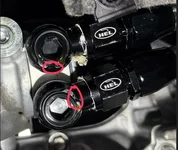
I've posted up my experience to thank and credit Nigel (& Wayne) at C-Tec for out of this world customer service from a passionate petrol head owner, but also to say give a heads up to other Zoo members with a HEL oil cooler fitted in the last year, keep an eye for any leaks from the banjo fittings (pic attached).

HEL have supplied Nigel with new banjo fittings which Nigel will replace as a matter of course at no cost on any cars that come in to him with with a HEL cooler fitted. If in doubt...

hel-banjo-adapter_3.webp
 
@RichM many thanks for posting this. As I have the same oil cooler kit, was the fault with one or more of the banjo fittings? Also, was the fitting the one attached to the sandwich plate?
 
@RichM many thanks for posting this. As I have the same oil cooler kit, was the fault with one or more of the banjo fittings? Also, was the fitting the one attached to the sandwich plate?
@notfub yep, pic attached of banjo fitting location. The precise cause of the leak was a slight imperfection on the thread of the banjo fitting. Replacement banjo fittings inspected for absence of thread imperfections have sorted it 👍

Edited to add pic @notfub

PXL_20260608_182840067.webp
 
Last edited:
great write up and follow up and of course your engine loves its cooler running temps but....a good number of folks with aftermarket oil coolers reporting momentary oil pressure drop under hard braking, wondering if anyone's looked into or noticed this issue
 
Where is this being reported? I haven't come across anything like this.

There have been reported pressure drops with the OEM oil pan which is resolved by installing baffles. Is that what you mean?
 
great write up and follow up and of course your engine loves its cooler running temps but....a good number of folks with aftermarket oil coolers reporting momentary oil pressure drop under hard braking, wondering if anyone's looked into or noticed this issue
There does seem to be some noise and opinions but I haven't seen anyone share any data that supports those claims. By contrast, I use TorquePro for every spirited drive I do and I review the data after every such drive. Amongst the parameters I log is engine oil pressure, each parameter is recorded every 0.25 second. I have been logging data for over 2 years . It's super geeky but I spend a few mins chucking the typically 20,000 rows of data from a drive on to a graph to look at parameters with particular interest in engine oil pressure given these engines being sensitive to oil starvation. Both pre and post oil cooler I have not observed any pressure readings lower than typical off throttle pressure of c15psi, and there are no differences in oil pressure before and after fitting the oil cooler. There are graphs of pre and post cooler attached to the first post of this thread. Hope that helps and please do share any facts or data if you come across any in relation to low pressure issues.
 
Thanks for sharing the data and observations, it's great that you're logging all of this.

I believe you've probably looked at a lot more graphs than just these two, and the bigger picture may tell a different story. But the graphs you've posted show that the oil cooler does reduce oil pressure. That's not really surprising, it would be pretty unusual if it didn't.

oil_pr.webp


I'd focus on is oil pressure under load rather than at idle, because that's what actually matters for engine protection. From the graphs, high RPM oil pressure looks to be about 7 psi lower with the cooler installed. And this happens while the oil temperature is roughly 15C lower than in the baseline run without the cooler. If the oil had reached the same temperature as the original run, the pressure difference would likely have been even larger. The cooler, thicker oil is also why we're seeing slightly higher pressure at lower RPM with the cooler fitted.

The reason idle pressure doesn't really change is that oil flow is quite low at idle, so the cooler doesn't create much of a restriction. Think of it as creating a slightly narrower doorway: if only a few people are walking through, nobody notices. It's only when a crowd tries to squeeze through at once that the restriction becomes obvious.

As RPM increases, the engine needs more oil flow, which is why pressure at higher RPM is more important. Toyota doesn't design the oil system with huge excess pressure because any extra pressure is essentially wasted energy. They provide the pressure the engine needs plus some safety margin. Adding an oil cooler naturally eats into some of that margin at the top end. If your oil temperatures are getting too high, an oil cooler is absolutely the right solution and can help prevent engine damage. But if oil temperatures are already within a safe range, the cooler isn't really providing any additional benefit. In that case, it's just adding extra restriction to the system, which slightly reduces the available oil pressure and safety margin at high RPM.
 
Thanks for sharing the data and observations, it's great that you're logging all of this.

I believe you've probably looked at a lot more graphs than just these two, and the bigger picture may tell a different story. But the graphs you've posted show that the oil cooler does reduce oil pressure. That's not really surprising, it would be pretty unusual if it didn't.

View attachment 41545

I'd focus on is oil pressure under load rather than at idle, because that's what actually matters for engine protection. From the graphs, high RPM oil pressure looks to be about 7 psi lower with the cooler installed. And this happens while the oil temperature is roughly 15C lower than in the baseline run without the cooler. If the oil had reached the same temperature as the original run, the pressure difference would likely have been even larger. The cooler, thicker oil is also why we're seeing slightly higher pressure at lower RPM with the cooler fitted.

The reason idle pressure doesn't really change is that oil flow is quite low at idle, so the cooler doesn't create much of a restriction. Think of it as creating a slightly narrower doorway: if only a few people are walking through, nobody notices. It's only when a crowd tries to squeeze through at once that the restriction becomes obvious.

As RPM increases, the engine needs more oil flow, which is why pressure at higher RPM is more important. Toyota doesn't design the oil system with huge excess pressure because any extra pressure is essentially wasted energy. They provide the pressure the engine needs plus some safety margin. Adding an oil cooler naturally eats into some of that margin at the top end. If your oil temperatures are getting too high, an oil cooler is absolutely the right solution and can help prevent engine damage. But if oil temperatures are already within a safe range, the cooler isn't really providing any additional benefit. In that case, it's just adding extra restriction to the system, which slightly reduces the available oil pressure and safety margin at high RPM.

@tonic thanks for the reply and clear explanation, that's really helpful.

Pre cooler install, I was seeing oil temps peaking at 115deg which from what I could find online was at the upper most end of the temperature operating window for the oil, so that was the driver for fitting the cooler. What would your view on a safe upper range for engine oil temperature?
 
@tonic thanks for the reply and clear explanation, that's really helpful.

Pre cooler install, I was seeing oil temps peaking at 115deg which from what I could find online was at the upper most end of the temperature operating window for the oil, so that was the driver for fitting the cooler. What would your view on a safe upper range for engine oil temperature?
Over 125 is not good, stay away from above 130.
There are always many variables with this (quality, viscosity, age, shear/heat tolerance etc), but that's my rough guide.
 
From what I've read, 90-105C is the optimal operating range for modern 0W-20 oils. At those temperatures, fuel dilution and condensation can evaporate properly, the additive package is fully active and the oil is at its intended operating viscosity to keep sufficient film strength.

If you occasionally hit 115C, I'd say that's completely fine and not a reason to install an additional oil cooler. If you're spending extended periods at 120C or above, like during a track days, then an oil cooler starts to make a lot more sense.

To meet the API SP specification, oil have to pass a number of tests. One of them is running an engine under increased load at ~4000 rpm with the oil temperature at 151C for 90 hours (not a typo). If you convert that into the mileage, it's easily 15000km running very hot oil. This test is for oxidation and deposit formation, and it definitely cause higher engine wear, but it also shows that oils and engines are designed to tolerate very high temperatures.

Like most decisions, oil cooling is a balancing act. For daily cars, cold starts can be bigger contributors to engine wear than occasional high oil temp. Adding an air/oil cooler, even a thermostat controlled one, increases warm-up time, which can increase wear.

So the answer is the usual annoying one: "It depends". If you're regularly tracking the car and seeing sustained oil temps above 120C, additional cooling is a good thing. If it's primarily a street car that occasionally reaches 115C, I'd stick with Toyota's setup.
 
Thanks again @tonic, great info 👍

I've spent some more time looking into my logged B road driving data. I have 24hrs of pre cooler data and 27hrs of post cooler data, comprising c750,000 data lines in total. All of this data represents drives of c1.5hr with plenty of time to allow lubricants to come up to temperature.

I've looked at engine oil temperature, engine oil pressure and as a proxy for ambient temp, IC intake temp.
Ambient temp averaged 16deg in the pre cooler data, and 19deg in the post cooler data. Perhaps slightly crudely but to simplify the analysis, I've considered this as too small a difference to have an impact on pressure particularly recognising this data is almost exclusively at engine oil operating temperatures significantly above ambient temp.

Some observations from the engine oil pressure and engine oil temperature:

Engine oil temp:
Pre cooler - avg temp 99deg, peak temp 115deg
Post cooler - AVG temp 82deg, peak temp 100deg
This supports conclusions drawn above that the cooler effect on temp is 15deg.

Engine oil pressure:
Pre cooler - avg 45psi, peak 70psi
Post cooler - avg psi 43.2, peak 71psi

So, despite engine oil temp 17% / 17deg lower post cooler install, average pressure is only 4% / 2psi lower with upper and lower pressure readings identical.

This suggests to me that the impact of the cooler reducing flow is negligible and it's unlikely that a cooler alone would be the cause of any engine pressure issues. Tbh, this also makes sense to me from the perspective of, if oil coolers introduced damaging flow and pressure reductions, those coolers would not survive in a competitive and open modification and motorsport world.

More likely, and as reported in relation to reported engine failures, low pressure issues are caused by oil starvation associated with high-G lateral/braking forces pulling oil away from the pickup point.

That said, based on the oil spec and heat tolerance I've learned about through this thread, I think I am probably on, or slightly below the cusp where an oil cooler offers substantial benefit. With that in mind, and significantly as I qualify for the Relax warranty, I am wondering whether it should stay or go....
 
A friend and I installed HEL oil cooler kits this February, and both of us experienced oil leaks in the banjo fitting, which also soaked the undertray.
IMG-20260215-WA0073.webpScreenshot 2026-06-28 224910.webp

We thought buying a reputable brand would be fine, but we were surprised to find leaks. Frankly, we're a bit disappointed with HEL.
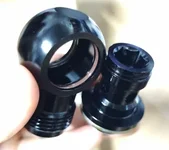
Furthermore, I disassembled their banjo fitting to investigate. It turns out they just use two O-rings to seal the inner lining. I think this design isn't tight enough. Even if it's not this faulty batch, the O-rings will age and leak over time. They shouldn't sell this kind of fitting to customers anymore.
Screenshot 2026-06-28 224357.webp
 
A friend and I installed HEL oil cooler kits this February, and both of us experienced oil leaks in the banjo fitting, which also soaked the undertray.
View attachment 41643View attachment 41645

We thought buying a reputable brand would be fine, but we were surprised to find leaks. Frankly, we're a bit disappointed with HEL.
Furthermore, I disassembled their banjo fitting to investigate. It turns out they just use two O-rings to seal the inner lining. I think this design isn't tight enough. Even if it's not this faulty batch, the O-rings will age and leak over time. They shouldn't sell this kind of fitting to customers anymore.
View attachment 41642
Havent seen such before, thought all AN connectors used crush washers?
 
Back
Top