
sixtentouge
Totally Hooked
- Aug 28, 2023
- 206
- 844
Long, boring to many post, and I know it doesn't really pertain to you in the UK or Downunder...but...
Went to the GR Garage Upgrade Selections personalized event today. Was going to skip it, but it was free for me, so whatever. I'm glad I went. It was a big deal with four cars from Nagoya (owned by Toyota). Got time in each of the different cars with different steering, AWD-system, throttle, and power calibrations. Spent A LOT of time talking to one of the development engineers about how all the management works. At first, he seemed like he didn't want to talk about "high tech" stuff, but when I told him... "well, when I was logging the sensors on a graphing scan tool and had a DSO logging the actual signal to the ITCC, and it was doing this..." He just laughed, and we took a deep dive into some of the modeling that's in the engine and AWD control software. Some classroom time discussing the car and the available software upgrades, followed by maybe an hour of driving the four cars. After each run, they'd download stuff into their laptops, and "interview" you about what you felt. Like I was a race driver, and giving feedback
There was also a young American software engineer there from the US, too . Super cool cat and we talked a lot about what they're doing with driving simulation and machine learning in their motorsport arena. Freaking fascinating for us otakus.
Stock steering feedback is awesome, but a tad heavy when you get a set of 200TW tires on the car at low speed. They can make it lighter or heavier, non-linear, with input from wheel speed, yaw sensors, etc. The American guy told me that one of the hardest things for them to get right in simulation is steering feedback to the driver. Machine-learning is on the job, and the Yaris is a result of this.
Stock throttle is a bit sluggish. Another thing on this car that you don't really notice until you drive a better version. Like when coming off of a corner and you slap the throttle at 4,500 RPM, that little bit of "lag" attributed to the turbo... The "lag" that a stiffer torque mount makes feel better... Yea, a lot of that is throttle response. The "high response" is a bit too much, making the car jerky on the slalom or when modulating around a 20m skid-pad. There's a "control" setting that's more linear, where it behaves much like a throttle cable, and is perfect (IMO). I think I would prefer the "high response" setting on touge, and "control" where there's a lot of on/off transition, like gymkhana. The development engineer told me that it's stock until between 2,700-3,300 RPM depending on system inputs. Keeps the car perfectly drivable in the day-to-day.
Stock "Track" mode is 50:50 F/R split. Two cars were 45:55 and 55:44. The difference is very noticeable on the skid-pad, with the rear bias actually being worse (to me), where it wants to push the front, and the front bias really pulls the car around. For tight winding road, slow-in/fast-out, I have my car set up where it will get the rear to squirm a little on exit while in "Normal" 60:40. "Track" 50:50 tends to push too much, and 30:70 just doesn't utilize the front traction enough. It would be different if you were tossing the car into the corner and setting it up for success at the beginning of the turn...but I drive on the street, so... I wished there was something in-between, and now there is. I may actually have them set it up 55:45 for Track mode.
Power is power... You wouldn't think you could feel 20nm more torque, but you drive it back-to-back, and you can in this car. They had a first-second, full-braking straight line acceleration test.
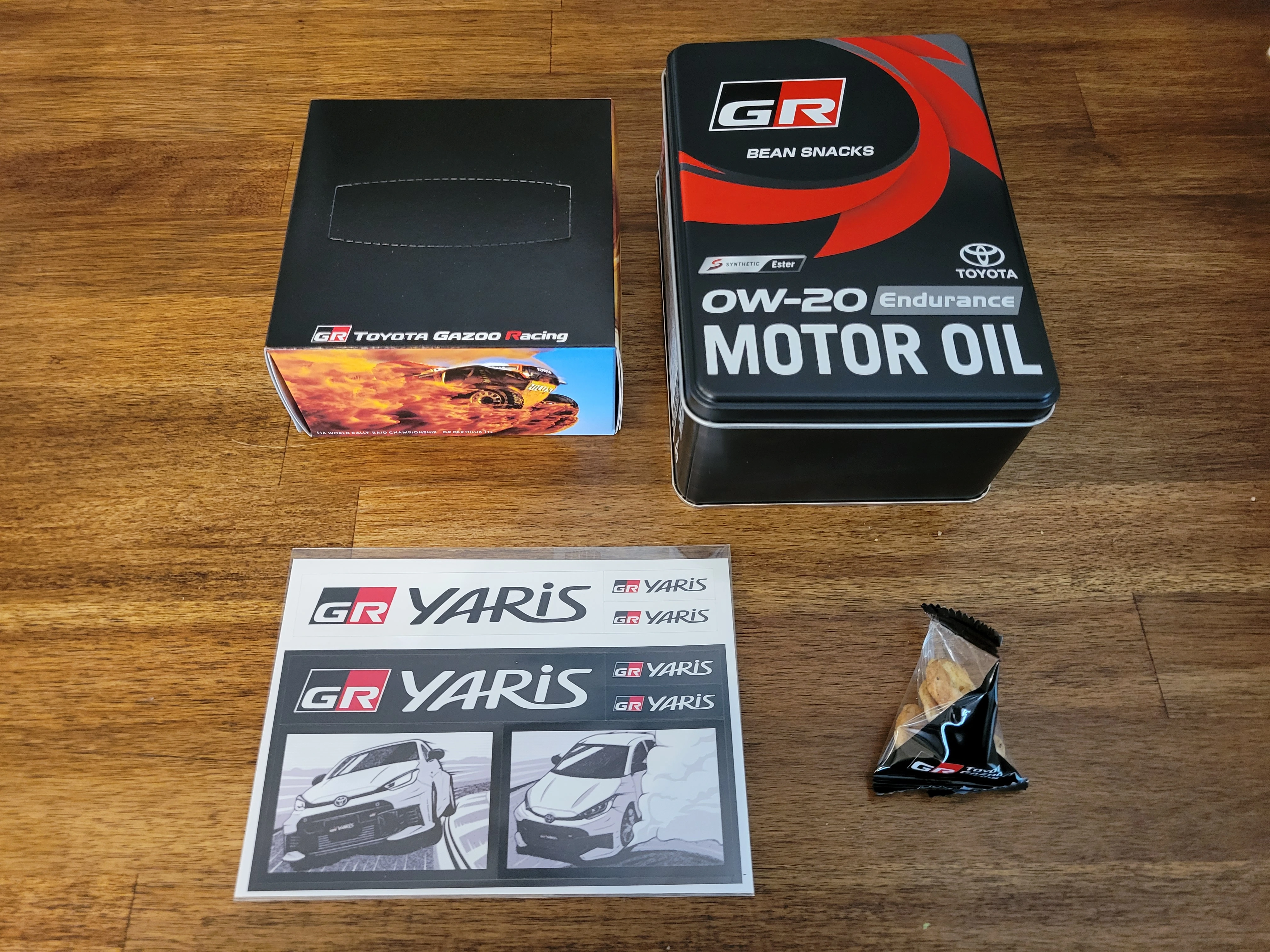
Big take away is that Toyota is all in for entry-level motorsport. I got presents again ...and I made myself slightly car sick going in circles around the skid-pad
 While the GR Yaris is not really a street car with go-fast goodies bolted on to sell it, but a true motorsport car made civilized, looking at the second version, I suspected that it's even less "daily" focused, and more targeted towards the motorsport customer. The development engineer enthusiastically confirmed this. Like he was happy that I could see what their focus was.
A few tech-specific take-aways. I asked about boost. When I put the HKS exhaust on my car, at first there was a big bump in power in the top end. I verified that upper-rpm boost was well up above target. After a while, the engine management took it away. It literally learned and adjusted. Engineer said the car is looking at turbine speed, to which I replied "there is no sensor for that." Turbine speed is modeled. Why is your Yaris boost sometimes high and sometimes low? My car has the factory intercooler water spray, so why don't I have more power due to lower IAT? ECM adjusts target turbine speed up...and down. It gives and it takes away As I suspected, engine pressure ratio is a concern, which is why boost is pulled back as the revs climb. It's not that the engine can't handle the boost, but the exhaust pressure will be very high with the stock turbo.
IMO, be very careful who you let screw with the stock ECM on this car.
What gives with the ITCC temperature sensor sitting in an air gap? What you see is modeled data. It not only takes into account the temperature in "the space," but things like left and right wheel speed difference, tight turns creating more heat in the differential, engine load, ITCC slippage, and a host of other things. I didn't even ask about the overheat "problem," as your AWD overheat at 450hp on track isn't a concern for what Toyota does with the car; primarily rally, gymkhana, etc. But what happens to the validity of the output data when we start modifying is certainly food for us nerds to think about
https://toyotagazooracing.com/.../202.../upgrade-selections/
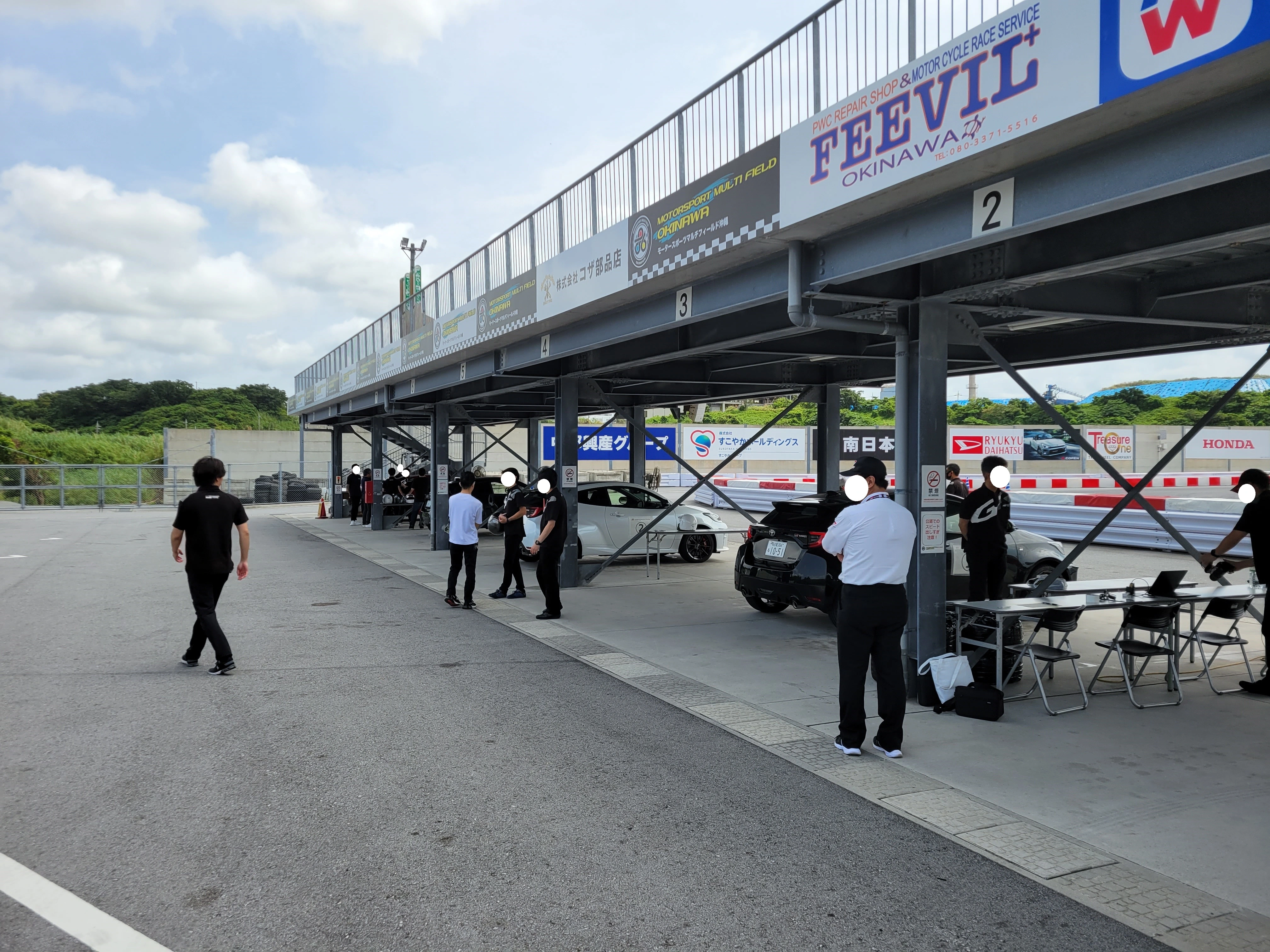
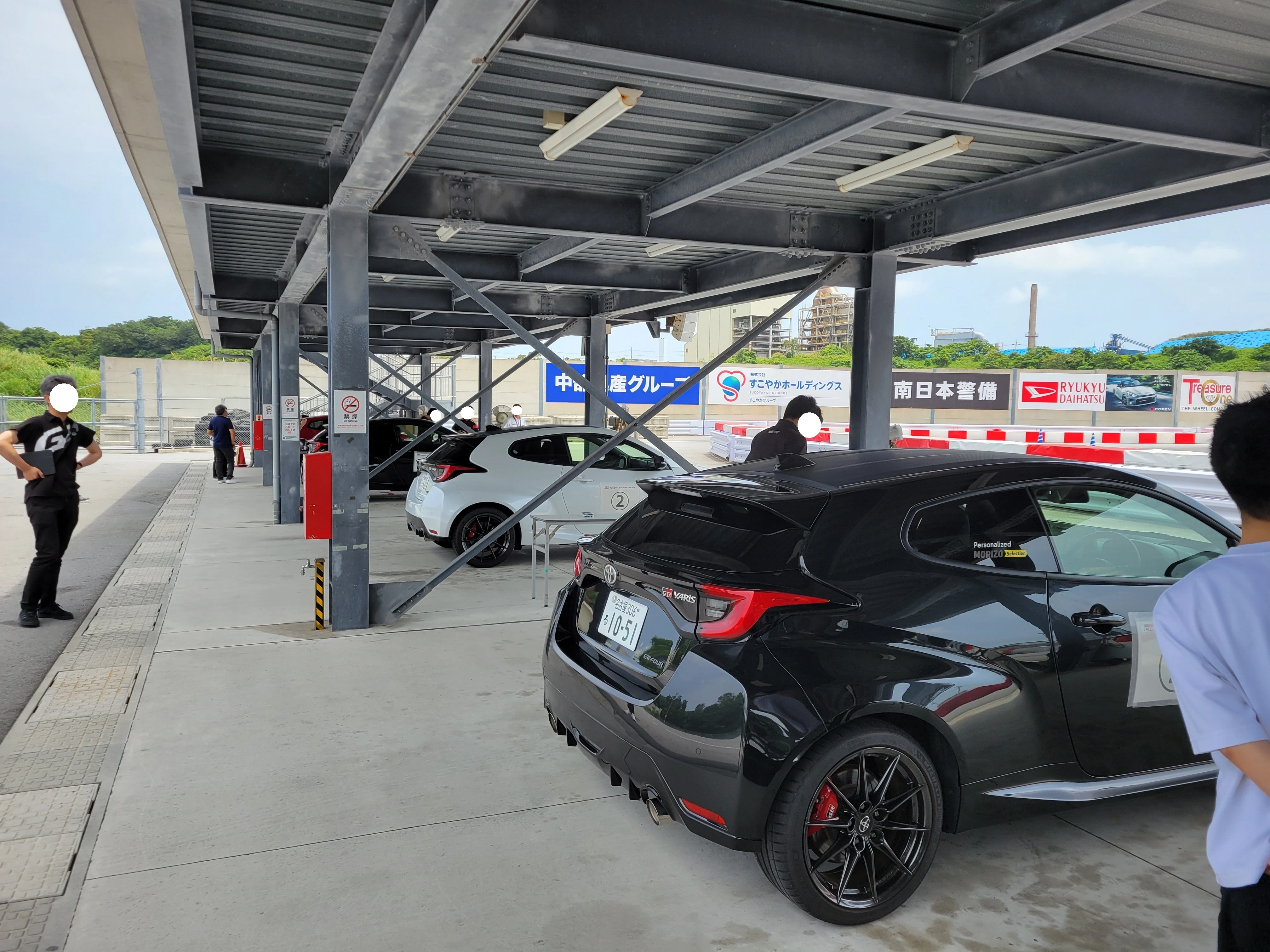
Went to the GR Garage Upgrade Selections personalized event today. Was going to skip it, but it was free for me, so whatever. I'm glad I went. It was a big deal with four cars from Nagoya (owned by Toyota). Got time in each of the different cars with different steering, AWD-system, throttle, and power calibrations. Spent A LOT of time talking to one of the development engineers about how all the management works. At first, he seemed like he didn't want to talk about "high tech" stuff, but when I told him... "well, when I was logging the sensors on a graphing scan tool and had a DSO logging the actual signal to the ITCC, and it was doing this..." He just laughed, and we took a deep dive into some of the modeling that's in the engine and AWD control software. Some classroom time discussing the car and the available software upgrades, followed by maybe an hour of driving the four cars. After each run, they'd download stuff into their laptops, and "interview" you about what you felt. Like I was a race driver, and giving feedback
There was also a young American software engineer there from the US, too . Super cool cat and we talked a lot about what they're doing with driving simulation and machine learning in their motorsport arena. Freaking fascinating for us otakus.
Stock steering feedback is awesome, but a tad heavy when you get a set of 200TW tires on the car at low speed. They can make it lighter or heavier, non-linear, with input from wheel speed, yaw sensors, etc. The American guy told me that one of the hardest things for them to get right in simulation is steering feedback to the driver. Machine-learning is on the job, and the Yaris is a result of this.
Stock throttle is a bit sluggish. Another thing on this car that you don't really notice until you drive a better version. Like when coming off of a corner and you slap the throttle at 4,500 RPM, that little bit of "lag" attributed to the turbo... The "lag" that a stiffer torque mount makes feel better... Yea, a lot of that is throttle response. The "high response" is a bit too much, making the car jerky on the slalom or when modulating around a 20m skid-pad. There's a "control" setting that's more linear, where it behaves much like a throttle cable, and is perfect (IMO). I think I would prefer the "high response" setting on touge, and "control" where there's a lot of on/off transition, like gymkhana. The development engineer told me that it's stock until between 2,700-3,300 RPM depending on system inputs. Keeps the car perfectly drivable in the day-to-day.
Stock "Track" mode is 50:50 F/R split. Two cars were 45:55 and 55:44. The difference is very noticeable on the skid-pad, with the rear bias actually being worse (to me), where it wants to push the front, and the front bias really pulls the car around. For tight winding road, slow-in/fast-out, I have my car set up where it will get the rear to squirm a little on exit while in "Normal" 60:40. "Track" 50:50 tends to push too much, and 30:70 just doesn't utilize the front traction enough. It would be different if you were tossing the car into the corner and setting it up for success at the beginning of the turn...but I drive on the street, so... I wished there was something in-between, and now there is. I may actually have them set it up 55:45 for Track mode.
Power is power... You wouldn't think you could feel 20nm more torque, but you drive it back-to-back, and you can in this car. They had a first-second, full-braking straight line acceleration test.
Big take away is that Toyota is all in for entry-level motorsport. I got presents again
...and I made myself slightly car sick going in circles around the skid-pad While the GR Yaris is not really a street car with go-fast goodies bolted on to sell it, but a true motorsport car made civilized, looking at the second version, I suspected that it's even less "daily" focused, and more targeted towards the motorsport customer. The development engineer enthusiastically confirmed this. Like he was happy that I could see what their focus was.A few tech-specific take-aways. I asked about boost. When I put the HKS exhaust on my car, at first there was a big bump in power in the top end. I verified that upper-rpm boost was well up above target. After a while, the engine management took it away. It literally learned and adjusted. Engineer said the car is looking at turbine speed, to which I replied "there is no sensor for that." Turbine speed is modeled. Why is your Yaris boost sometimes high and sometimes low? My car has the factory intercooler water spray, so why don't I have more power due to lower IAT? ECM adjusts target turbine speed up...and down. It gives and it takes away
As I suspected, engine pressure ratio is a concern, which is why boost is pulled back as the revs climb. It's not that the engine can't handle the boost, but the exhaust pressure will be very high with the stock turbo. IMO, be very careful who you let screw with the stock ECM on this car.
What gives with the ITCC temperature sensor sitting in an air gap? What you see is modeled data. It not only takes into account the temperature in "the space," but things like left and right wheel speed difference, tight turns creating more heat in the differential, engine load, ITCC slippage, and a host of other things. I didn't even ask about the overheat "problem," as your AWD overheat at 450hp on track isn't a concern for what Toyota does with the car; primarily rally, gymkhana, etc. But what happens to the validity of the output data when we start modifying is certainly food for us nerds to think about
https://toyotagazooracing.com/.../202.../upgrade-selections/


